
|
MEXICO: caribbean | reefs | cenotes biotopes | cenotes caves | lagoon | tulum | cancun region |
|
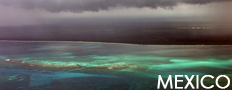
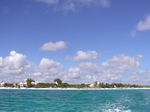
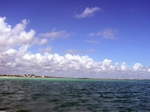
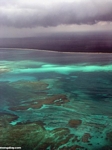
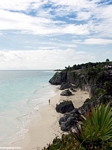
Photos from the Yucatan, Mexico
Below are links to pictures from the Mexican Yucatan. caribbean | reefs | cenotes biotopes | cenotes caves | lagoon | tulum | cancun region Except where noted, all images are the property of Rhett A. Butler, copyright 1994-2004. Contact me with questions regarding use, reproduction, or purchase of any of the pictures.
Recommended travel guides on Mexico: Cancun [Wikipedia]: Geography The average temperature in Canc�n is 27� C (80� F) with more than 240 days of sunshine, and rain is rare. The beaches are almost 100 percent limestone; the porous quality of the limestone makes for cool sand even under the intense tropical sun. Canc�n is divided into two parts: The narrow 23-kilometer-long (14-mile) island section (Canc�n Island) is lined with modern beachfront hotels surrounded by the Bah�a de Mujeres (Bay of Women), the Caribbean Sea, and the Nichupte and Bojorquez lagoons. The mainland downtown commercial section (Canc�n City), connected to the island by two bridges, has broad avenues lined with whitewashed shops, restaurants, and hotels. History In the early 1950s Canc�n was an almost unpopulated and undeveloped island just off the Caribbean Sea coast of the Yucat�n peninsula, home to three caretakers of a coconut plantation and small Pre-Columbian ruins of the Maya civilization. The government of Mexico decided to develop a tourist resort on Canc�n which was originally financed by a USD $27 million loan from the International Development Bank. A causeway was built to link Canc�n to the mainland, and an international airport was built, along with what was at first a model city for workers, complete with housing, schools and medical facilities. On the opposite side of the island from the Caribbean Sea is Nichupte Lagoon, which is used for boat and snorkelling tours of the area. Development of Canc�n started in 1970 and grew rapidly in the 1980s. Unfortunately, the original very sensible master plan was repeatedly modified and, on the mainland, often ignored. According to long-time resident Jules Siegel (author of the "Cancun User's Guide" and translator of Fernando Mart�'s "Cancun, Fantasy of Bankers"), municipal authorities have struggled to provide public services for the constant influx of people, as well as to control squatters and irregular developments, which now occupy an estimated ten to fifteen percent of the mainland area on the fringes of the city, he says. Despite initial skepticism that forced the Mexican government to finance the first eight hotels, Cancun soon attracted investors from all over the world, but approximately 70% of the Hotel Zone properties are owned by Mexicans, many of them local residents, Siegel says. The figure is close to 100% for the mainland. Some observers believe that the resort is foreign-owned because they are confused by the hotel operating companies, which are international companies that supply administration and marketing services. They do not usually own the hotels themselves. Even outlets of restaurant chains such as McDonald's and Domino's Pizza are Mexican-owned. The city has grown rapidly over the past thirty years to become a city of approximately half a million residents, covering the former island and the nearby mainland. There are actually very few true 'cancunenses' (people originally from Canc�n) because of the rate at which the resort and its service areas grew. Most people living here are from mainland Mexico and a growing number are from the rest of America and Europe. Environmental concerns Although some environmentalists claim that Canc�n is an environmental disaster, Siegel says that is not true. There has obviously been environmental damage and the situation could deteriorate rapidly, he reports, but at present (February 2005) Canc�n's main problem is a breakdown of garbage collection and disposal as a result of political conflicts that will hopefully be solved by a new administration elected February 6, 2005. Sewage treatment is another danger point, he says. Although approximately 75% of the city has public sewer lines, many homes rely on septic tanks. The underground water table is beginning to show symptoms of contamination, but by the standards of most populated areas in the United States the water is still relatively clean. "You can see the bottom of the Caribbean off Canc�n in satellite photographs," Siegel says. He discusses this and other issues at length on his website, https://www.cafecancun.com. Tourism in Canc�n In Canc�n there are about 140 hotels with 24,000 rooms and 380 restaurants. Three million visitors arrive each year in an average of 190 flights daily. The hotel zone is one of the most exclusive internationally, with upmarket restaurants, bars, and the like which have catered for quite a number of the rich and famous. The hotel zone tends to be rather expensive as it is aimed at visitors and relies on the all inclusive hotels to keep them all in this area allowing prices to soar. Downtown is home to less expensive places to shop like Walmart, Comercial Mexicana and Soriana, not to mention several flea markets like the one in the hotel zone. Downtown Canc�n gives us a different aspect. There are also many clubs for all types of people, including gay clubs like Karamba or Glow, but the hotels are more accessible to all types of travelers, including some with lower rates. International brands in Downtown area are Radisson Hacienda Cancun, Best Western Plaza Caribe, Oasis America. The temperature of the city is warm, moderated by the marine breeze which circulates through its avenues. The temperatures are typically between 26�C and 36�C (78.8�F and 96.8�F). Canc�n's hotel zone also has an interactive aquarium where visitors can see the marine diversity of the area, swim with dolphins and feed sharks. Here and there in the hotel zone are some ancient ruins. The main language in Canc�n is Spanish, although English is widely spoken throughout the tourist areas. Mayan dialects are also spoken between some workers and people born in the Yucat�n peninsula. Canc�n is served by Canc�n International Airport. Articles involving tourism in Mexico: SHARE: |
what's new | rainforests | tropical fish | for kids | search | about | copyright & use | contact |
Copyright Rhett Butler 1994-2025 Pictures were taken by Rhett A. Butler, copyright 1994-2025. While these photos are the property of mongabay.com, it may be permissible to use them for non-commercial purposes (like powerpoint presentations and school projects), provided that the images are not altered in any form. Please read this for more details. If you are interested in using an image in a publication please contact me. Mongabay.com is a free resource. |
