All images are the property of Rhett A. Butler / mongabay.com, copyright 2006.
Contact me regarding use and reproduction.
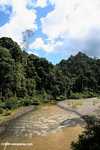
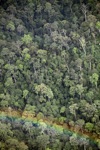
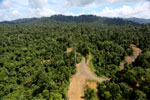
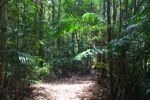
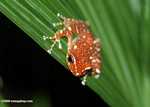
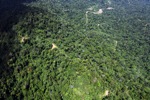
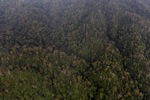
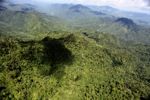
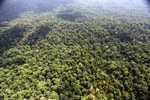
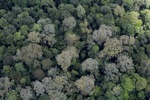
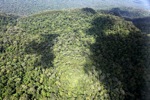
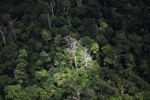
Most of Malaysia's remaining rainforests are found on the island of Borneo—peninsular Malaysia's primary forests are presently limited to a few national parks. The extent of the forests of Borneo (Sarawak and Sabah) was seriously reduced during the 1980s and 1990s when large amounts of timber were exported from the states of Sabah and Sarawak.
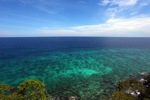
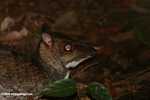
Despite these losses, today Malaysia has a number of forest-oriented tourist destinations including Danum Valley in Sabah and Taman Negara in peninsular Malaysia. Most of these pictures were taken in these locations. Malaysia is also known for its world-class snorkeling and diving both off the peninsula and the island of Boreno.
Unilever calls for ban on rainforest destruction for palm oil
(5/1/2008) Unilever, the world's largest consumer good company, will start using palm oil from certified sustainable sources this year and aims to have all its palm oil certified by 2015, according to a speech delivered today by CEO Patrick Cescau.
Borneo's pygmy elephants are an alien species
(4/18/2008) A new study suggests that the Borneo pygmy elephant -- one of Borneo's best known and charismatic animals -- is actually an invasive species introduced from a neighboring island by a former sultan. The finding offers hope that in Borneo, the elephant can avoid the fate that befell it in its native Java: extinction.
Malaysian palm oil industry puts sustainability in the spotlight
(4/17/2008) Seeking to differentiate its palm oil from that produced less responsibly in other countries, the Malaysian Palm Oil Council (MPOC) sponsored a three-day meeting this week in Kota Kinabalu, on the island of Borneo.
Photos by late Borneo rainforest hero, indigenous rights activist go online
(4/17/2008) On April 19th over 10,000 of Bruno Manser's photographs will be made available to the public on-line. The pictures are rare documentation of the nomadic Penan peoples from the Malaysian state of Sarawak in Borneo. Swiss environmentalist Bruno Manser proved an unflinching and passionate advocate for the Penans in the 1990s as their territory was increasingly deforested by industrial logging companies.
Palm oil boycott an unrealistic approach to conserving biodiversity
(4/15/2008) Boycotting palm oil produced in Southeast Asia in an "unrealistic" and "ineffective" approach to conserving the region's fast-disappearing rainforests, said a Princeton University researcher speaking at a conference on the sustainability of palm oil. Instead, NGOs should focus on engaging and working with the palm oil industry to reduce its impact on the environment. Addressing the first International Palm Oil Sustainability Conference in Kota Kinabalu, Malaysia, Princeton biologist Dr. David S. Wilcove said that the palm oil industry is too important to the economies of Indonesia and Malaysia to justify blanket import bans on the edible oil used in food, cosmetics, industrial products, and biodiesel. The palm oil industry contributes to health, education, and infrastructure in rural areas.
Saving the world's most recently discovered cat species in Borneo
(4/10/2008) Last year two teams of scientists announced the discovery of a new species of clouded leopard in Borneo. The news came as conservationists launched a major initiative to conserve a large area of forest on an island where logging and oil palm plantations have consumed vast expanses of highly biodiverse tropical rainforest over the past thirty years. Now a pair of researchers are racing against the clock to better understand the behavior of these rare cats to see how well they adapt to these changes in and around Danum Valley in Malaysia's Sabah state. Andrew Hearn and Joanna Ross run the Bornean Wild Cat and Clouded Leopard Project, an effort that aims to understand and protect Borneo's threatened wild cats, which include the flat-headed cat (Prionailurus planiceps), marbled cat (Pardofelis marmorata) leopard cat (Prionailurus bengalensis) the endemic bay cat (Catopuma badia) and the Bornean clouded leopard (Neofelis nebulosa).
Amid accusations of bribery by loggers, Borneo chief's remains to be exhumed
(2/19/2008) Police have announced that they plan to exhume the body of Kelesau Naan to discover the cause of death. The Penan chieftain and passionate activist against logging disappeared in October while checking animal traps. His body was found on December 12th of last year. Several bones were broken, leading some to believe that Naan was assassinated because of his longtime work against loggers. Kelesau Naan had been one of the key figures in the Penan community's fight against logging. He was also a plaintiff and witness in a land rights claim that has been awaiting trial since 1998.
Rainforest chief killed in Borneo for his opposition to logging
(1/3/2008) Keleasu Naan, a Penan chieftain and longtime activist against logging, disappeared in October while checking animal traps. His tribes' worst fears were confirmed when they found what they believed to be Naan's remains last month. According to the Associated Press, the chieftain's nephew, Michael Ipa, has stated that the body had several broken bones, leading Ipa to believe that "he has been killed by people involved in logging".
Orangutan should become symbol of palm-oil opposition
(1/2/2008) In a letter published today in Nature, Oscar Venter, Erik Meijaard and Kerrie Wilson argue that proposals for conservation groups to purchase and run oil palm plantations for the purpose of generating funds for forest protection are unlikely to be successful. The concept was originally put forth by Lian Pin Koh and David S. Wilcove in a 2007 Nature article.
Palm oil is a net source of CO2 emissions when produced on peatlands
(12/17/2007) Researchers have confirmed that converting peat forests for oil palm plantations results in a large net release of carbon dioxide, indicating industry claims that palm oil helps fight climate change are unfounded, at least when plantations are established in peatlands.
Kyoto pact ignores CO2 emissions from biofuels
(12/5/2007) The Kyoto climate pact, as it currently stands, ignores millions of tons of carbon dioxide emissions from the drainage of peatsoils for palm oil production in Indonesia and Malaysia, warnned Wetlands International, an international NGO, in a report released at the UN climate meeting in Bali.
Cooking oil, palm oil biodiesel can reduce emissions relative to diesel
(11/28/2007) A lifecycle analysis of biodiesel by Australia's Commonwealth Scientific and Industrial Research Organization (CSIRO) shows that using palm oil derived from existing plantations can be an effective biofuel feedstock for reducing greenhouse gas emissions relative to conventional diesel fuel. However, palm oil sourced from rainforest and peatlands generating emissions 8 to 21 times greater than those from diesel.
Can wildlife conservation banking generate investment returns?
(11/27/2007) A commercial venture in the Malaysian rainforest will seek to generate competitive returns on investment by protecting wildlife. The scheme -- signed by the Sabah government and Sydney-based New Forests Pty Ltd -- will establish a wildlife habitat conservation bank to manage the 34,000 ha Malua Forest Reserve on the island of Borneo.
Palm oil industry announces "eco" standards for production
(11/26/2007) Palm oil producers -- under fire from environmentalists who say the industry is driving the wholesale destruction of biodiverse rainforests in Malaysia and Indonesia -- last week announced a new certification process to ensure greener environmental standards for palm oil, reports Reuters.
Pictures were taken by Rhett A. Butler, copyright 2007. While these photos are the property of mongabay.com, it may be permissable to use them for non-commercial purposes (like powerpoint presentations and school projects), provided that the images are not altered in any form. Please read this for more details. If you are interested in using an image in a publication please contact me.
Mongabay.com is a free resource. Unless otherwise specified, all pics, , photographs, and graphics found on travel.mongabay.com are the property of mongabay.com. If you are interested in using a pic, photo, photograph, picture, or graphic from the site, please contact mongabay.com. Also if you find errors or dead links on the site, please let me know.
Pictures were taken by Rhett A. Butler, copyright 2007. While these photos are the property of mongabay.com, it may be permissable to use them for non-commercial purposes (like powerpoint presentations and school projects), provided that the images are not altered in any form. Please read this for more details. If you are interested in using an image in a publication please contact me.
Mongabay.com is a free resource. Unless otherwise specified, all pics, , photographs, and graphics found on travel.mongabay.com are the property of mongabay.com. If you are interested in using a pic, photo, photograph, picture, or graphic from the site, please contact mongabay.com. Also if you find errors or dead links on the site, please let me know.