
|
INDIA: Palaces | Kama Sutra Carvings | Places | Other India Photos | 2005 India Photos |
|
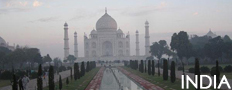
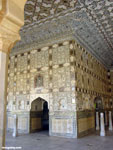
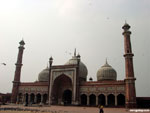
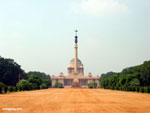
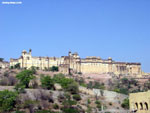
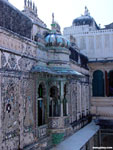
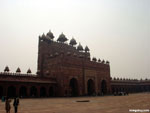
India Pictures: Palaces
India Photos - Palaces All images are the property of Rhenda Glasco. Contact me with questions regarding use, reproduction, or purchase of any of the pictures. Library of Congress: India 2005 update Library of Congress: India Largest cities in India India Environmental Report 1999 Index | Palaces | Kama Sutra Carvings | Places | Other India Photos | Other India Photos | 2005 India Photos
Recommended travel guides on India: 

Culture of India [Wikitravel]: Indian society is largely pluralist, multilingual and multicultural. Religious practices of various faiths are an integral part of everyday life in society. Education is highly regarded by members of every socio-economic stratum. The traditional Indian family values are highly respected and considered sacred, although urban families have grown into a nuclear family system, owing to the socio-economic constraints imposed by the traditional joint family system. Religion in India is very public, with many practices imbued with pomp and vitality accompanying their underlying spiritual qualities. A melting pot of many religions, India has rich festivals celebrated by one and all. The most widely known and popular celebrations include the Hindu festivals of Dipawali, Holi, and Dussehra. Pongal is a harvest festival celebrated by people belonging to all religions in Tamil Nadu. Indian music is represented by a wide variety of forms. The two main forms in terms of classical music are the Carnatic from South India and Hindustani from the north. Popular forms of music also prevail, the most notable being Filmi music. In addition to this are the diverse traditions of folk music. Many dance forms exist in India � Bharatanatyam, Odissi, Kuchipudi, Kathak, Kathakali and others. They often have a narrative form (based on the Indian epics) and are usually infused with devotional and spiritual elements. The earliest literary traditions were mostly oral and were later transcribed. Most of these spring from Hindu tradition and are represented by sacred works like the Vedas and the epics of the Mahabharatha and Ramayana. Sangam literature from Tamil Nadu represents some of India's oldest secular traditions. There have been many notable Indian writers in modern times, both in Indian languages and English. India's only Nobel laureate in literature was the Bengali writer Rabindranath Tagore. India produces the world's highest number of films annually. The most recognisable face is that of Bollywood, based in Mumbai, which produces mainly commercial Hindi films. Cinema in other language bases is particularly strong, with movies regularly produced in well-established Bengali, Malayalam, Tamil, Kannada and Telugu industries. India's gift to world cinema was the internationally renowned Bengali language director Satyajit Ray. Rice and wheat (in bread forms) are the staple foods in the country. The cuisine of India is extremely diverse, as ingredients, spices and cooking methods all vary from region to region. The country is notable for its wide variety of vegetarian cuisine. Spicy food and sweets are popular in India. Traditional dress in India greatly varies across the regions in its colours and styles. The sari and salwar kameez are popular styles of dress for women. Traditional raiments for men are the kurta and dhoti. List of World Heritage sites in India
India's national sport is field hockey, although cricket is now the de facto national game due to its success and popularity in recent times. Though cricket's popularity is widespread, it is not the most popular sport in many states of India, particularly India's northeast states. India has had relatively little success in international events like the Olympics, where it garnered just a single medal in each of the previous three Olympics. Some traditional indigenous sports are kabaddi, Kho Kho and gilli-danda, which are played in most parts of the country. Chess, carrom, polo, and badminton are some other games and sports that are said to have originated in India. Football (soccer) also finds a large viewer ship in almost the entire country, and is the most popular sport in many states of India, especially West Bengal. Formula 1 and Tennis are also becoming popular these days, though their reach is largely in urban areas. Articles involving tourism in India: SHARE: |

what's new | rainforests | tropical fish | for kids | search | about | copyright & use | contact |
Copyright Rhett Butler 1994-2012 Pictures were taken by Rhett A. Butler, copyright 1996-2009. While these photos are the property of mongabay.com, it may be permissible to use them for non-commercial purposes (like powerpoint presentations and school projects), provided that the images are not altered in any form. Please read this for more details. If you are interested in using an image in a publication please contact me. Mongabay.com is a free resource. |
