INDIA: Slideshow | High resolution | Palaces | Kama Sutra Carvings | Places | 2003 | 2005




India Travel Pictures


India Photos - Palaces

Contact me with questions regarding use, reproduction, or purchase of any of the pictures.

Library of Congress: India 2005 update
Library of Congress: India
Largest cities in India
India Environmental Report 1999


SECTIONS: Index | Palaces | Kama Sutra Carvings | Places | Other India Photos | 2005 India Photos

SOME PHOTO HIGHLIGHTS OF INDIA


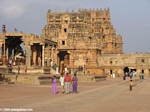
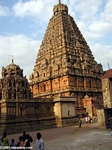
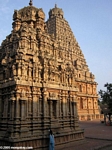
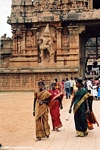
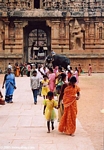
Madurai: Minakshi Sundareshvara Temple

Tiruchirapalli district


India


India


India


India


India


India


India


India


Peacock


Hawa Mahal, Jaipur


India


Hawa Mahal, Jaipur


India


India


India


Mamallapuram - Panch Rathas


Mamallapuram - Panch Rathas


Mamallapuram - Panch Rathas


Mamallapuram - Panch Rathas


Cochin


India


Backwaters near Kerala


Backwaters near Kerala


Kerala


India


India


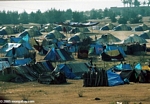
Tsunami refugee camp near Chennai


Children at Mamallapuram


Mamallapuram


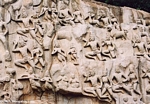
Panch Rathas stone carvings


India


India


India


India


Taj Mahal


Taj Mahal


Taj Mahal minaret


Taj Mahal


Taj Mahal


Taj Mahal


Taj Mahal


Taj Mahal


Taj Mahal


Taj Mahal


Taj Mahal


Taj Mahal


Taj Mahal


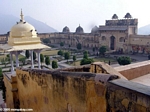
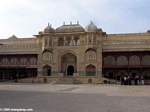
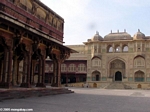
Amber fort


Amber fort


Amber fort


Amber fort


Amber fort


Amber fort


Amber fort


Amber fort


Amber fort


Amber fort


Amber fort


Amber fort


Amber fort


Fatehpur Sikri


Fatehpur Sikri


Fatehpur Sikri


Fatehpur Sikri


Fatehpur Sikri


Fatehpur Sikri


Recommended travel guides on India:


Culture of India [Wikipedia]:

The culture of India is one of the oldest cultures known to humanity. In modern India, there is remarkable cultural diversity throughout the country. The South, North, and Northeast have their own distinct cultures and almost every state has carved out its own cultural niche.

Cultural policy

The cultural policy of the Government of India has three major objectives:
  • Preserving the cultural heritage of India,
  • inculcating Indian art consciousness amongst Indians and
  • promoting high standards in creative and performing arts.
History

The by far most, total endearing aspects of Indian art and architecture prior to colonization has been the strong impact of religious and folk idioms and folk art on courtly art. Although folk art received little encouragement during the period of colonization, independence brought forward a renewed interest in folk paintings.

Traditions

Indians join their hands (palms together) and bow slightly in front of the other person, and say Namaste (Sanskrit for "I bow unto you" or "I salute the divine in thee") or Namaskar (derived from Sanskrit for "salutations") or variants in other Indian languages. This custom comes from a Hindu understanding that each person is inherently divine, and for this reason many Indians will gently touch their hands to their forehead and then to their heart, indicating the third eye and heart.

Festivals in India are characterized by colour, gaiety, enthusiasm, prayers and rituals. The majority are from the Hindu tradition, one of the most popular festivals being Diwali/Deepavali; the legends associated with it are drawn from the Hindu epic Ramayana and the Devi Mahatmya, depending on the region. Other popular Hindu festivals include Navaratri/Dasara (which is held in celebration of the Hindu goddess Durga), the final and ninth day of which culminates in a massive Durga Puja; it is most popular in West Bengal), Pongal/Sankranti (which is held as a thanksgiving for the harvest to the elements and cattle), Ganesh Chaturthi (a fourteen-day festival dedicated to the Hindu God Ganesh and is most popular in Maharashtra and Ugadi/Gudi Padva).

However, as India is home to many more religions viz. Islam, Sikhism, Jainism, Buddhism, Judaism, etc. festivals in India include festivities of these faiths as well.

Indian fashion

Indian fashion is rich in tradition, vibrant in colors and truly beautiful designs. Bold colors and metallics created by the inventive drapes of these textiles catch the imagination like no other contemporary clothing.

Some Indian dress designers combine Western trends with Indian touch, creating garments which are truly outstanding.

Drama and theatre

Indian drama and theatre is perhaps as old as its music and dance. The tradition of folk theatre is alive in nearly all the linguistic regions of the country. In addition, there is a rich tradition of puppet theatre in rural India. Bollywood is a place to be for the drama lovers

Literature

The earliest literary traditions were mostly oral and were later transcribed. Most of these spring from Hindu tradition and are represented by sacred works like the Vedas, the epics of the Mahabharata and Ramayana. Sangam literature from Tamil Nadu represents some of India's oldest secular traditions. Indian writers in modern times, like Arundhati Roy, Vikram Seth, Khushwant Singh have been the cynosure of wide acclaim, both in Indian languages and English.

Dance

India offers a number of classical dance forms, each of which can be traced to different parts of the country. Each form represents the culture and ethos of a particular region or a group of people. The seven main styles are Bharatanatyam, Kathak, Odissi, Kuchipudi, Mohiniattam, Manipuri and Kathakali.

There are many types of dance in India, from those which are deeply religious in content, often based on old Vedic or Hindu folk traditions, to those which are danced on lighter occasions.

Music

The music of India includes multiples varieties of folk, popular, pop, and classical music. India's classical music tradition, including Carnatic and Hindustani music, has a history spanning millenia and, developed over several eras, remains fundamental to the lives of Indians today as sources of religious inspiration, cultural expression and pure entertainment. India is made up of several dozen ethnic groups, speaking their own languages and dialects. Alongside distinctly subcontinental forms there are major influences from Persian, Arab, and British music. Indian genres like filmi and bhangra have become popular throughout the United Kingdom, South and East Asia, and around the world.

Indian pop stars now sell records in many countries, while world music fans listen to the roots music of India's diverse nations. American soul, rock and hip hop music have also made a large impact, primarily on Indian pop and filmi music.

Art

The vast scope of the art of India intertwines with the cultural history, religions and philosophies which place art production and patronage in social and cultural contexts.

Indian art can be classified into specific periods each reflecting certain religious, political and cultural developments.
  • Hinduism and Buddhism of the ancient period (300 BC- 1700 AD)
  • Islamic ascendancy (712-1757 AD)
  • The colonial period (1757-1947)
  • Independence and the postcolonial period (Post-1947)
  • Modern and Postmodern art in India
Each period is unique in its art, literature and architecture. Indian art is constantly challenged as it rises to the peak of achieving the ideals of one philosophy in a visual form, then begins anew for another. This challenge and revolution in thought provided, and still provides, Indian artists with reasons for innovation and creation, and the process of visualizing abstract ideas and the culture of the land.

Each religion and philosophical system provided its own nuances, vast metaphors and similes, rich associations, wild imaginations, humanization of gods and celestial beings, characterization of people, the single purpose and ideal of life to be interpreted in art

Painting

Indian painting is an old tradition, with ancient texts outlining theories of color and anecdotal accounts suggesting that it was common for households to paint their doorways or indoor rooms where guests resided.

Cave paintings from Ajanta, Bagh and Sittanvasal and temple paintings testify to a love of naturalism and God. Most rock art in India is Hindu or Buddhist.

A freshly made flour design (Rangoli) everyday is still a common sight outside the doorstep of many (mostly South Indian) Indian homes.

Jahangir Art Gallery, Mumbai, has on display several good Indian paintings.

Movies

Bollywood is the informal name given to the popular Mumbai-based film industry in India. Bollywood and the other major cinematic hubs (Bengali, Kannada, Malayalam, Tamil, Telugu) constitute the broader Indian film industry, whose output is considered to be the largest in the world in terms of number of films produced and, possibly, number of tickets sold.

Bollywood films are usually musicals. Few movies are made without at least one song-and-dance number. Indian audiences expect full value for their money; they want songs and dances, love interest, comedy and dare-devil thrills, all mixed up in a three hour long extravaganza with intermission. Such movies are called masala movies, after the Indian spice mixture masala. Like masala, these movies are a mixture of many things. Plots tend to be melodramatic. They frequently employ formulaic ingredients such as star-crossed lovers and angry parents, corrupt politicians, kidnappers, conniving villains, courtesans with hearts of gold, long-lost relatives and siblings separated by fate, dramatic reversals of fortune, and convenient coincidences, and even movies with tri polar changes that can turn a movie and its plot upside down.

Recreation and sports

In the area of recreation and sports India had evolved a number of games. One would be surprised to know today that games like, Chess, Snakes and Ladders, Playing cards, Polo, the martial art Kung-fu had originated as a sport in India and it was from here that these games were transmitted to foreign countries, where they were further modernized. Additionally, a few games introduced during the British Raj have grown quite popular in India, field hockey and especially cricket. Although field hockey is India's official national sport, cricket is by far the most popular sport not only in India, but the entire subcontinent, thriving recreationally and professionally. Cricket has even been used recently as a forum for diplomatic relations between India and long-standing rival, Pakistan. The two nations' cricket teams face off annually and such contests are quite impassioned on both sides.

Cuisine

The earliest Indians, the Harappans, probably ate mainly wheat and rice and lentils, and occasionally cows, pigs, sheep, and goats, and chicken. Rice and chicken seem to have come from Thailand, and wheat and sheep from West Asia. Some of the wheat was made into stews or soups, and some into flat breads called chapatis. The arrival of the Aryans does not seem to have changed Indian eating habits.

But by around 300 BC, under the Mauryans, a lot of Hindus felt that animal sacrifices added to your karma and kept you from getting free of the wheel of reincarnation. Animal sacrifices became less popular, and although people didn’t give up eating meat entirely, they ate much less of it. Many people became vegetarians.

In the Gupta period, around 650 AD, Hindus began to worship a Mother Goddess. Cows were sacred to her, and so Hindus stopped eating beef.

And then around 1100 AD, with the Islamic conquests in northern India, most people in India stopped eating pork as well, because it is forbidden by the Koran.

People could still eat sheep or goats or chicken, but most of the people in India became vegetarians, and only ate meat very rarely or not at all. The vegetarian food that Indians ate was mainly wheat flatbreads or a kind of flatbread made out of chickpeas, with a spicy vegetarian sauce, and yogurt. Or people ate rice, with yogurt and vegetables. A lot of spicy peppers grew in India.

India Conservation / Environmental News

Growing cardamom impacts forests for decades

(05/17/2012) Over 25 years after people stopped growing cardamom in Sri Lanka's Knuckles Forest Reserve (KFR), the spice crop is still having an impact on the forest, according to a recent study in Forest Ecology and Management. The clearing of understory plants and the use of fertilizers continue to shape the forest in the protected area.


Hail Mary effort aims to save the world's most endangered turtles

(04/17/2012) The Wildlife Conservation Society (WCS) has pledged to work with all of its institutions to save at least half of the world's most 25 endangered turtles as listed in a report by WCS and the Turtle Conservation Coalition last year. The program will include both conservation work in the field as well as participation from WCS's zoological institutions for captive breeding and future reintroductions. Even with WCS's ambitious program, however, it is likely this century will see a number of turtle extinctions.


Camera traps discover tigers, elephants in "empty" forest park

(04/16/2012) Although it's named Namdapha Tiger Reserve, conservationists had long feared that tigers, along with most other big mammals, were gone from the park in northeast India. However, an extensive camera trap survey has photographed not only Bengal tigers (Panthera tigris tigris), but also Asian elephants (Elephas maximus), which were also thought extirpated from the park. Once dubbed an "empty forest" due to poaching, the new survey shows that Namdapha still has massive conservation potential.


UN: wild teak forests declining

(03/28/2012) Wild teak forests continue to decline, threatening genetic diversity, while commercial planted teak forests are on the rise, according to a new assessment by the Food and Agriculture Organization (FAO). Overall, teak forests have declined by 1.3 percent, or 385,000 hectares, worldwide from 1992 to 2010. Teak (Tectona grandis) is used for a variety of commercial purposes, including outdoor furniture and flooring.


How tiny otters survive in agricultural India

(03/19/2012) In the fragmented rainforests of India, many animals must move through human-modified landscapes such as agricultural fields to survive. This includes the world's smallest otter species: the Asian small-clawed otter (Aonyx cinereus). According to a new study published in mongabay.com's open access journal Tropical Conservation Society, the Asian small-clawed otter is widespread in streams flowing through tea and coffee estates of the Western Ghats, but requires improved protection.


Featured Video: new family of legless amphibians discovered

(03/07/2012) Researchers exploring northeast India have discovered a new family of legless amphibians, known as caecilians. Although caecilians superficially resemble giant earthworms, they are in fact vertebrates and are most closely related to their amphibian kin, frogs and salamanders.


India targets forests for destruction, industrial development

(02/28/2012) In a bid to fast-track industrial projects, India's Prime Minister's Office (PMO) is opening up 25 percent of forests that were previously listed as "no-go" areas, reports the Hindustan Times. The designation will allow between 30 and 50 new industrial projects to go ahead rapidly, including road construction and coal mining. Reportedly the changes came after industry representatives met with the Prime Minister's Office, headed by Manmohan Singh, to complain that projects were being held up by environmental regulations, in some cases taking six years for approval.


Cute baby animal photos of the day: twin slender lorises born at London Zoo

(02/27/2012) Twin grey slender lorises (Loris lydekkerianus) were born in the Zoological Society of London's (ZSL) zoo in London this month, a notable event since lorises rarely give birth to twins. Found in India and Sri Lanka, these nocturnal, big-eyed primates scour trees for insects. Although listed as Least Concern, the species is imperiled by deforestation, impacts from cats, electrocution on power lines, use in traditional medicine, and the pet trade.


Frog plague found in India

(01/03/2012) The chytrid fungus, which is responsible for the collapse of numerous amphibian populations as well as the extinction of entire species, has been located for the first time in India, according to a paper in Herpetological Review. Researchers took swabs of frog in the genus Indirana in the Western Ghats and found the killer fungus known as chytridiomycosis.


Photo essay: Lion-tailed macaques of India's Western Ghats rainforest

(12/19/2011) The rainforests of Western Ghats are home to some of the most wonderful creatures which are found only in these forests and no where else on the earth. The Lion-tailed Macaque Macaca silenus is the symbol of this endemic diversity of this biodiversity hotspot. Less than 2500 of these survive today making it one of the most endangered primates in the world. In 2008, a healthy population of 32 groups of these macaques were found in central Karnataka giving hope to the future of these Knights of the Western Ghats


Interview with conservation legend George Schaller

(12/13/2011) Dr George Schaller is a veteran ecologist affiliated with two conservation organizations in New York, Panthera and the Wildlife Conservation Society. Spending much of his time during the past six decades in various countries of Asia, Africa and South America, he has studied and helped protect species as diverse as the Tiger, Mountain Gorilla, Giant Panda and Tibetan Antelope. In addition, he has promoted the establishment of about 15 protected areas. His studies have been the basis for his scientific and popular writings.


Mixed reactions to the Durban agreement

(12/12/2011) Early Sunday morning over 190 of the world's countries signed on to a new climate agreement at the 17th UN Framework Convention on Climate Change (UNFCCC) in Durban, South Africa. The summit was supposed to end on Friday, but marathon negotiations pushed government officials to burn the midnight oil for about 36 extra hours. The final agreement was better than many expected out of the two week summit, but still very far from what science says is necessary to ensure the world does not suffer catastrophic climate change.


Global carbon emissions rise 49 percent since 1990

(12/04/2011) Total carbon emissions for the first time hit 10 billion metric tons (36.7 billion tons of CO2) in 2010, according to new analysis published by the Global Carbon Project (GCP) in Nature Climate Change. In the past two decades (since the reference year for the Kyoto Protocol: 1990), emissions have risen an astounding 49 percent. Released as officials from 190 countries meet in Durban, South Africa for the 17th UN Summit on Climate Change to discuss the future of international efforts on climate change, the study is just the latest to argue a growing urgency for slashing emissions in the face of rising extreme weather incidents and vanishing polar sea ice, among other impacts.


Carbon credit market for HFC-23 racked by fraud

(11/30/2011) An effort to decrease emissions of the super greenhouse gas HFC-23 has led to a largely-false carbon market that should be eliminated, argues the Environmental Investigation Agency (EIA). HFC-23 is a byproduct of the refrigerant HCFC-22, which is currently being phased out under the Montreal Protocol for its ozone-depleting and greenhouse gas properties. However, the effort to reduce HFC-23 through a carbon market has been hampered by companies in India and China producing extra HFC-23 just so they can capture and destroy it—and receive lucrative carbon funds.


Rare apes saved in India

(11/30/2011) Two Hoolock gibbons have been successfully translocated from a fragmented forest to Mehao Wildlife Sanctuary in the beginning of a desperate bid to save 18 family groups of India's last apes. Living near the village of Dello in northeastern India, the apes were straining to survive amid heavy deforestation and fragmentation.


Chemotherapy tree facing extinction

(11/10/2011) A yew tree in the Himalayas that produces the chemotherapy drug, Taxol, is in danger of extinction. An update to the IUCN Red List, has moved the tree, named Taxus contorta, from Vulnerable to Endangered. Overharvesting for medicine and fuelwood have placed the species in serious danger.


Last year's greenhouse gas emissions topple worst-case scenario

(11/06/2011) Global greenhouse gas emissions last year exceeded worst-case scenario predictions from just four years before, according to the US Department of Energy (DOE). A rise of 6 percent (564 million additional tons) over 2009 levels was largely driven by three nations: the US, India, and China. Emissions from burning coal jumped 8 percent overall. The new data, supported by a similar report from International Energy Agency (IEA), make it even more difficult for nations to make good on a previous pledge to hold back the world from warming over 2 degrees Celsius.


Climate change already worsening weird, deadly, and expensive weather

(11/02/2011) Unprecedented flooding in Thailand, torrential rains pummeling El Salvador, long-term and beyond-extreme drought in Texas, killer snowstorm in the eastern US—and that's just the last month or so. Extreme weather worldwide appears to be both increasing in frequency and intensity, and a new report from the Intergovernmental Panel on Climate Change (IPCC) connects the dots between wilder weather patterns and global climate change.


Sober up: world running out of time to keep planet from over-heating

(10/24/2011) If governments are to keep the pledge they made in Copenhagen to limit global warming within the 'safe range' of two degrees Celsius, they are running out of time, according to two sobering papers from Nature. One of the studies finds that if the world is to have a 66 percent chance of staying below a rise of two degrees Celsius, greenhouse gas emissions would need to peak in less than a decade and fall quickly thereafter. The other study predicts that pats of Europe, Asia, North Africa and Canada could see a rise beyond two degrees Celsius within just twenty years.


New study: price carbon at the point of fossil fuel extraction

(10/17/2011) Global carbon emissions are a complicated matter. Currently, officials estimate national fossil fuel-related emissions by what is burned (known as production) within a nation, but this approach underestimates the emissions contributions from countries that extract oil and oil for export. Is there a better way to account for a country's total climate change footprint?


Fossil fuel subsidies going in the wrong direction?

(10/05/2011) In 2009, G20 nations committed to phasing out fossil fuel subsidies over the medium term, yet are further away today than they were two years ago from keeping the pledge. According to the International Energy Agency (IEA) fossil fuel subsidies rose by nearly $100 billion in the last year alone, from $312 billion in 2009 to $409 billion in 2010. The agency warned that subsidies could reach $660 billion by 2020 if governments don't act on reform.


Pictures: 12 new species of frog discovered in India

(09/15/2011) Scientists have discovered 12 new species of frogs in the rainforests of India's Western Ghats, according to a paper published in the latest issue of ZooTaxa.


Controversial study finds intensive farming partnered with strict protected areas is best for biodiversity

(09/01/2011) Given that we have very likely entered an age of mass extinction—and human population continues to rise (not unrelated)—researchers are scrambling to determine the best methods to save the world's suffering species. In the midst of this debate, a new study in Science, which is bound to have detractors, has found that setting aside land for strict protection coupled with intensive farming is the best way to both preserve species and feed a growing human world. However, other researchers say the study is missing the point, both on global hunger and biodiversity.


Photos: 10 new frogs discovered in India's great rainforest

(08/09/2011) Ten new species of frog have been discovered in India's Western Ghats according to two new papers in Biosystematica. Although human populations have farmed in the Western Ghats for centuries, the new discoveries prove that the rainforest still holds many surprises. The Western Ghats lie along India's west coast and have been dubbed one of the world's biodiversity hotspots, but the rich wildlife is imperiled by rising human impacts.


Balancing agriculture and rainforest biodiversity in India’s Western Ghats

(08/08/2011) When one thinks of the world's great rainforests the Amazon, Congo, and the tropical forests of Southeast Asia and Indonesia usually come to mind. Rarely does India—home to over a billion people—make an appearance. But along India’s west coast lies one of the world's great tropical forests and biodiversity hotspots, the Western Ghats. However it's not just the explosion of life one finds in the Western Ghats that make it notable, it's also the forest's long—and ongoing—relationship to humans, lots of humans. Unlike many of the world's other great rainforests, the Western Ghats has long been a region of agriculture. This is one place in the world where elephants walk through tea fields and tigers migrate across betel nut plantations. While wildlife has survived alongside humans for centuries in the region, continuing development, population growth and intensification of agriculture are putting increased pressure on this always-precarious relationship. In a recent paper in Biological Conservation, four researchers examine how well agricultural landscapes support biodiversity conservation in one of India's most species-rich landscapes.


Malaria may hurt conservation efforts, aid poachers

(07/31/2011) In 2009, 781,000 people died of malaria worldwide and nearly a quarter billion people contracted the mosquito-bourne disease, according to the World Health Organization (WHO). While the impacts of malaria on people—among the world's worst diseases—have long been researched, a new study in Biological Conservation finds that malaria has a significant indirect impact on protected species. Many species contract various malaria strains, but the study also found that malaria in humans has the potential to leave endangered species unprotected.


Back from a century of extinction, conservation proposed for elusive Asian flying squirrel

(06/27/2011) The Travancore flying squirrel (Petinomys fuscocapillus) occurs in the forests of the Western Ghats and Sri Lanka, a global biodiversity hotspot, and is listed as Near Threatened on the IUCN Red List. During the first half of the 20th century the species was thought to be extinct, but was rediscovered in the 1960s, then not seen again for over twenty years.


Belief and butchery: how lies and organized crime are pushing rhinos to extinction

(05/11/2011) Few animals face as violent, as well organized, and as determined an enemy as the world's rhinos. Across the globe rhinos are being slaughtered in record numbers; on average more than one rhino is killed by poachers everyday. After being shot or drugged, criminals take what they came for: they saw off the animal's horn. Used in Traditional Chinese Medicine, which claims that it has curative properties, rhino horn is worth more than gold and cocaine on the black market. However, science proves all this cash and death is based on a lie. 'There is no medicinal benefit to consuming rhino horn. It has been extensively analyzed in separate studies, by different institutions, and rhino horn was found to contain no medical properties whatsoever,' says Rhishja Larson.


Rise in wildlife tourism in India comes with challenges

(04/27/2011) A line of tourist jeeps clogs the road in a dry forest, as all eyes—and cameras—are on a big cat ambling along the road ahead; when the striped predator turns for a moment to face the tourists, voices hush and cameras flash: this is a scene that over the past decade has becoming increasingly common in India. A new study in Conservation Letters surveyed ten national parks in India and found that attendance had increased on average 14.9% from 2002-2006, but while rising nature tourism in India comes with education and awareness opportunities, it also brings problems.


Clean energy investments rise 630% in 7 years

(03/29/2011) According to a report by the US Pew Environment Group global clean energy investments, which do not include nuclear power, jumped 630% since 2004. The report detailing 2010 clean energy investments found that China remains the global leader in clean energy, while the US fell from 2nd to 3rd. This is the second year in a row that the US fell: in 2009 it lost first place to China. In all $243 billion were invested in clean energy in 2010.


what's new | rainforests | tropical fish | for kids | search | about | copyright & use | contact

Copyright Rhett Butler 1994-2008

Pictures were taken by Rhett A. Butler, copyright 2008. While these photos are the property of mongabay.com, it may be permissible to use them for non-commercial purposes (like powerpoint presentations and school projects), provided that the images are not altered in any form. Please read this for more details. If you are interested in using an image in a publication please contact me.


Mongabay.com is a free resource.