
India Photos
Last updated: 23 Dec 2022


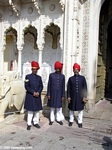


The culture of India is one of the oldest cultures known to humanity. In modern India, there is remarkable cultural diversity throughout the country. The South, North, and Northeast have their own distinct cultures and almost every state has carved out its own cultural niche.
Cultural policy
The cultural policy of the Government of India has three major objectives:
The by far most, total endearing aspects of Indian art and architecture prior to colonization has been the strong impact of religious and folk idioms and folk art on courtly art. Although folk art received little encouragement during the period of colonization, independence brought forward a renewed interest in folk paintings.
Traditions
Indians join their hands (palms together) and bow slightly in front of the other person, and say Namaste (Sanskrit for "I bow unto you" or "I salute the divine in thee") or Namaskar (derived from Sanskrit for "salutations") or variants in other Indian languages. This custom comes from a Hindu understanding that each person is inherently divine, and for this reason many Indians will gently touch their hands to their forehead and then to their heart, indicating the third eye and heart.
Festivals in India are characterized by colour, gaiety, enthusiasm, prayers and rituals. The majority are from the Hindu tradition, one of the most popular festivals being Diwali/Deepavali; the legends associated with it are drawn from the Hindu epic Ramayana and the Devi Mahatmya, depending on the region. Other popular Hindu festivals include Navaratri/Dasara (which is held in celebration of the Hindu goddess Durga), the final and ninth day of which culminates in a massive Durga Puja; it is most popular in West Bengal), Pongal/Sankranti (which is held as a thanksgiving for the harvest to the elements and cattle), Ganesh Chaturthi (a fourteen-day festival dedicated to the Hindu God Ganesh and is most popular in Maharashtra and Ugadi/Gudi Padva).
However, as India is home to many more religions viz. Islam, Sikhism, Jainism, Buddhism, Judaism, etc. festivals in India include festivities of these faiths as well.
Indian fashion
Indian fashion is rich in tradition, vibrant in colors and truly beautiful designs. Bold colors and metallics created by the inventive drapes of these textiles catch the imagination like no other contemporary clothing.
Some Indian dress designers combine Western trends with Indian touch, creating garments which are truly outstanding.
Drama and theatre
Indian drama and theatre is perhaps as old as its music and dance. The tradition of folk theatre is alive in nearly all the linguistic regions of the country. In addition, there is a rich tradition of puppet theatre in rural India. Bollywood is a place to be for the drama lovers
Literature
The earliest literary traditions were mostly oral and were later transcribed. Most of these spring from Hindu tradition and are represented by sacred works like the Vedas, the epics of the Mahabharata and Ramayana. Sangam literature from Tamil Nadu represents some of India's oldest secular traditions. Indian writers in modern times, like Arundhati Roy, Vikram Seth, Khushwant Singh have been the cynosure of wide acclaim, both in Indian languages and English.
Dance
India offers a number of classical dance forms, each of which can be traced to different parts of the country. Each form represents the culture and ethos of a particular region or a group of people. The seven main styles are Bharatanatyam, Kathak, Odissi, Kuchipudi, Mohiniattam, Manipuri and Kathakali.
There are many types of dance in India, from those which are deeply religious in content, often based on old Vedic or Hindu folk traditions, to those which are danced on lighter occasions.
Music
The music of India includes multiples varieties of folk, popular, pop, and classical music. India's classical music tradition, including Carnatic and Hindustani music, has a history spanning millenia and, developed over several eras, remains fundamental to the lives of Indians today as sources of religious inspiration, cultural expression and pure entertainment. India is made up of several dozen ethnic groups, speaking their own languages and dialects. Alongside distinctly subcontinental forms there are major influences from Persian, Arab, and British music. Indian genres like filmi and bhangra have become popular throughout the United Kingdom, South and East Asia, and around the world.
Indian pop stars now sell records in many countries, while world music fans listen to the roots music of India's diverse nations. American soul, rock and hip hop music have also made a large impact, primarily on Indian pop and filmi music.
Art
The vast scope of the art of India intertwines with the cultural history, religions and philosophies which place art production and patronage in social and cultural contexts.
Indian art can be classified into specific periods each reflecting certain religious, political and cultural developments.
Each religion and philosophical system provided its own nuances, vast metaphors and similes, rich associations, wild imaginations, humanization of gods and celestial beings, characterization of people, the single purpose and ideal of life to be interpreted in art
Painting
Indian painting is an old tradition, with ancient texts outlining theories of color and anecdotal accounts suggesting that it was common for households to paint their doorways or indoor rooms where guests resided.
Cave paintings from Ajanta, Bagh and Sittanvasal and temple paintings testify to a love of naturalism and God. Most rock art in India is Hindu or Buddhist.
A freshly made flour design (Rangoli) everyday is still a common sight outside the doorstep of many (mostly South Indian) Indian homes.
Jahangir Art Gallery, Mumbai, has on display several good Indian paintings.
Movies
Bollywood is the informal name given to the popular Mumbai-based film industry in India. Bollywood and the other major cinematic hubs (Bengali, Kannada, Malayalam, Tamil, Telugu) constitute the broader Indian film industry, whose output is considered to be the largest in the world in terms of number of films produced and, possibly, number of tickets sold.
Bollywood films are usually musicals. Few movies are made without at least one song-and-dance number. Indian audiences expect full value for their money; they want songs and dances, love interest, comedy and dare-devil thrills, all mixed up in a three hour long extravaganza with intermission. Such movies are called masala movies, after the Indian spice mixture masala. Like masala, these movies are a mixture of many things. Plots tend to be melodramatic. They frequently employ formulaic ingredients such as star-crossed lovers and angry parents, corrupt politicians, kidnappers, conniving villains, courtesans with hearts of gold, long-lost relatives and siblings separated by fate, dramatic reversals of fortune, and convenient coincidences, and even movies with tri polar changes that can turn a movie and its plot upside down.
Recreation and sports
In the area of recreation and sports India had evolved a number of games. One would be surprised to know today that games like, Chess, Snakes and Ladders, Playing cards, Polo, the martial art Kung-fu had originated as a sport in India and it was from here that these games were transmitted to foreign countries, where they were further modernized. Additionally, a few games introduced during the British Raj have grown quite popular in India, field hockey and especially cricket. Although field hockey is India's official national sport, cricket is by far the most popular sport not only in India, but the entire subcontinent, thriving recreationally and professionally. Cricket has even been used recently as a forum for diplomatic relations between India and long-standing rival, Pakistan. The two nations' cricket teams face off annually and such contests are quite impassioned on both sides.
Cuisine
The earliest Indians, the Harappans, probably ate mainly wheat and rice and lentils, and occasionally cows, pigs, sheep, and goats, and chicken. Rice and chicken seem to have come from Thailand, and wheat and sheep from West Asia. Some of the wheat was made into stews or soups, and some into flat breads called chapatis. The arrival of the Aryans does not seem to have changed Indian eating habits.
But by around 300 BC, under the Mauryans, a lot of Hindus felt that animal sacrifices added to your karma and kept you from getting free of the wheel of reincarnation. Animal sacrifices became less popular, and although people didn�t give up eating meat entirely, they ate much less of it. Many people became vegetarians.
In the Gupta period, around 650 AD, Hindus began to worship a Mother Goddess. Cows were sacred to her, and so Hindus stopped eating beef.
And then around 1100 AD, with the Islamic conquests in northern India, most people in India stopped eating pork as well, because it is forbidden by the Koran.
People could still eat sheep or goats or chicken, but most of the people in India became vegetarians, and only ate meat very rarely or not at all. The vegetarian food that Indians ate was mainly wheat flatbreads or a kind of flatbread made out of chickpeas, with a spicy vegetarian sauce, and yogurt. Or people ate rice, with yogurt and vegetables. A lot of spicy peppers grew in India.
Cultural policy
The cultural policy of the Government of India has three major objectives:
- Preserving the cultural heritage of India,
- inculcating Indian art consciousness amongst Indians and
- promoting high standards in creative and performing arts.
The by far most, total endearing aspects of Indian art and architecture prior to colonization has been the strong impact of religious and folk idioms and folk art on courtly art. Although folk art received little encouragement during the period of colonization, independence brought forward a renewed interest in folk paintings.
Traditions
Indians join their hands (palms together) and bow slightly in front of the other person, and say Namaste (Sanskrit for "I bow unto you" or "I salute the divine in thee") or Namaskar (derived from Sanskrit for "salutations") or variants in other Indian languages. This custom comes from a Hindu understanding that each person is inherently divine, and for this reason many Indians will gently touch their hands to their forehead and then to their heart, indicating the third eye and heart.
Festivals in India are characterized by colour, gaiety, enthusiasm, prayers and rituals. The majority are from the Hindu tradition, one of the most popular festivals being Diwali/Deepavali; the legends associated with it are drawn from the Hindu epic Ramayana and the Devi Mahatmya, depending on the region. Other popular Hindu festivals include Navaratri/Dasara (which is held in celebration of the Hindu goddess Durga), the final and ninth day of which culminates in a massive Durga Puja; it is most popular in West Bengal), Pongal/Sankranti (which is held as a thanksgiving for the harvest to the elements and cattle), Ganesh Chaturthi (a fourteen-day festival dedicated to the Hindu God Ganesh and is most popular in Maharashtra and Ugadi/Gudi Padva).
However, as India is home to many more religions viz. Islam, Sikhism, Jainism, Buddhism, Judaism, etc. festivals in India include festivities of these faiths as well.
Indian fashion
Indian fashion is rich in tradition, vibrant in colors and truly beautiful designs. Bold colors and metallics created by the inventive drapes of these textiles catch the imagination like no other contemporary clothing.
Some Indian dress designers combine Western trends with Indian touch, creating garments which are truly outstanding.
Drama and theatre
Indian drama and theatre is perhaps as old as its music and dance. The tradition of folk theatre is alive in nearly all the linguistic regions of the country. In addition, there is a rich tradition of puppet theatre in rural India. Bollywood is a place to be for the drama lovers
Literature
The earliest literary traditions were mostly oral and were later transcribed. Most of these spring from Hindu tradition and are represented by sacred works like the Vedas, the epics of the Mahabharata and Ramayana. Sangam literature from Tamil Nadu represents some of India's oldest secular traditions. Indian writers in modern times, like Arundhati Roy, Vikram Seth, Khushwant Singh have been the cynosure of wide acclaim, both in Indian languages and English.
Dance
India offers a number of classical dance forms, each of which can be traced to different parts of the country. Each form represents the culture and ethos of a particular region or a group of people. The seven main styles are Bharatanatyam, Kathak, Odissi, Kuchipudi, Mohiniattam, Manipuri and Kathakali.
There are many types of dance in India, from those which are deeply religious in content, often based on old Vedic or Hindu folk traditions, to those which are danced on lighter occasions.
Music
The music of India includes multiples varieties of folk, popular, pop, and classical music. India's classical music tradition, including Carnatic and Hindustani music, has a history spanning millenia and, developed over several eras, remains fundamental to the lives of Indians today as sources of religious inspiration, cultural expression and pure entertainment. India is made up of several dozen ethnic groups, speaking their own languages and dialects. Alongside distinctly subcontinental forms there are major influences from Persian, Arab, and British music. Indian genres like filmi and bhangra have become popular throughout the United Kingdom, South and East Asia, and around the world.
Indian pop stars now sell records in many countries, while world music fans listen to the roots music of India's diverse nations. American soul, rock and hip hop music have also made a large impact, primarily on Indian pop and filmi music.
Art
The vast scope of the art of India intertwines with the cultural history, religions and philosophies which place art production and patronage in social and cultural contexts.
Indian art can be classified into specific periods each reflecting certain religious, political and cultural developments.
- Hinduism and Buddhism of the ancient period (300 BC- 1700 AD)
- Islamic ascendancy (712-1757 AD)
- The colonial period (1757-1947)
- Independence and the postcolonial period (Post-1947)
- Modern and Postmodern art in India
Each religion and philosophical system provided its own nuances, vast metaphors and similes, rich associations, wild imaginations, humanization of gods and celestial beings, characterization of people, the single purpose and ideal of life to be interpreted in art
Painting
Indian painting is an old tradition, with ancient texts outlining theories of color and anecdotal accounts suggesting that it was common for households to paint their doorways or indoor rooms where guests resided.
Cave paintings from Ajanta, Bagh and Sittanvasal and temple paintings testify to a love of naturalism and God. Most rock art in India is Hindu or Buddhist.
A freshly made flour design (Rangoli) everyday is still a common sight outside the doorstep of many (mostly South Indian) Indian homes.
Jahangir Art Gallery, Mumbai, has on display several good Indian paintings.
Movies
Bollywood is the informal name given to the popular Mumbai-based film industry in India. Bollywood and the other major cinematic hubs (Bengali, Kannada, Malayalam, Tamil, Telugu) constitute the broader Indian film industry, whose output is considered to be the largest in the world in terms of number of films produced and, possibly, number of tickets sold.
Bollywood films are usually musicals. Few movies are made without at least one song-and-dance number. Indian audiences expect full value for their money; they want songs and dances, love interest, comedy and dare-devil thrills, all mixed up in a three hour long extravaganza with intermission. Such movies are called masala movies, after the Indian spice mixture masala. Like masala, these movies are a mixture of many things. Plots tend to be melodramatic. They frequently employ formulaic ingredients such as star-crossed lovers and angry parents, corrupt politicians, kidnappers, conniving villains, courtesans with hearts of gold, long-lost relatives and siblings separated by fate, dramatic reversals of fortune, and convenient coincidences, and even movies with tri polar changes that can turn a movie and its plot upside down.
Recreation and sports
In the area of recreation and sports India had evolved a number of games. One would be surprised to know today that games like, Chess, Snakes and Ladders, Playing cards, Polo, the martial art Kung-fu had originated as a sport in India and it was from here that these games were transmitted to foreign countries, where they were further modernized. Additionally, a few games introduced during the British Raj have grown quite popular in India, field hockey and especially cricket. Although field hockey is India's official national sport, cricket is by far the most popular sport not only in India, but the entire subcontinent, thriving recreationally and professionally. Cricket has even been used recently as a forum for diplomatic relations between India and long-standing rival, Pakistan. The two nations' cricket teams face off annually and such contests are quite impassioned on both sides.
Cuisine
The earliest Indians, the Harappans, probably ate mainly wheat and rice and lentils, and occasionally cows, pigs, sheep, and goats, and chicken. Rice and chicken seem to have come from Thailand, and wheat and sheep from West Asia. Some of the wheat was made into stews or soups, and some into flat breads called chapatis. The arrival of the Aryans does not seem to have changed Indian eating habits.
But by around 300 BC, under the Mauryans, a lot of Hindus felt that animal sacrifices added to your karma and kept you from getting free of the wheel of reincarnation. Animal sacrifices became less popular, and although people didn�t give up eating meat entirely, they ate much less of it. Many people became vegetarians.
In the Gupta period, around 650 AD, Hindus began to worship a Mother Goddess. Cows were sacred to her, and so Hindus stopped eating beef.
And then around 1100 AD, with the Islamic conquests in northern India, most people in India stopped eating pork as well, because it is forbidden by the Koran.
People could still eat sheep or goats or chicken, but most of the people in India became vegetarians, and only ate meat very rarely or not at all. The vegetarian food that Indians ate was mainly wheat flatbreads or a kind of flatbread made out of chickpeas, with a spicy vegetarian sauce, and yogurt. Or people ate rice, with yogurt and vegetables. A lot of spicy peppers grew in India.
More information about this website
These photos are part of my library of 150,000-plus images. Other images may be available beyond those displayed on this page.
To find additional images, you can the Advanced search function at Mongabay to search by country, tag, country-tag combination, etc.
Usage: You are welcome to use this image in presentations or for other purposes provided that you don't remove the watermark. If you are looking to license a high resolution version of the image, contact me.