Malachite Kingfisher (Alcedo cristata)
 Purple heron in flight
 Blue-breasted bee-eater (Merops variegates variegatus)
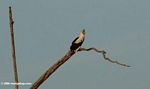
 Palm-nut vulture (Gypohierax angolensis) in flight
 African skimmers (Rynchops flavirostris)
 African skimmers (Rynchops flavirostris) in flight
 African skimmers (Rynchops flavirostris)
 Weaver bird nests in a palm tree
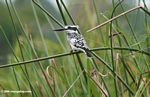
 Pied kingfisher (Ceryle rudis rudis)
 African darter taking flight
 Yellow-billed stork (Mycteria ibis)
 Giant kingfisher (Megaceryle maxima)
 Vieillot's black weaver (Ploceus nigerrimus nigerrimus) working on a nest that once belonged to a Village weaver (P. subpersonatus)
 Vieillot's black weaver (Ploceus nigerrimus nigerrimus) working on a nest
 Malachite Kingfisher (Alcedo cristata) perched on a branch
 Wooly-necked stork (Ciconia episcopus) taking flight
 Breeding male Village Weaver (Ploceus cucullatus) bird on a beach in Ombue, Gabon
|
|
| |
Related articles
When elephants attack. Surviving an elephant charge in the Congo rainforest of Gabon
June 26, 2006
The elephant charges. The ground trembles. Hearts racing, we are now sprinting through the forest dodging vegetation as the elephant plows right through it. The problem with being chased by an elephant, aside from their obvious size advantage, is they can run faster than you. While wild elephants can be dangerous animals under the right circumstances, other creatures are responsible for more deaths in Africa. Topping the list is the hippo, whose penchant for capsizing canoes that come too close results in the dumping of passengers who often can't swim. Buffalo, crocodiles, and lions are directly responsible for more deaths and injuries.
Roads tied to bushmeat hunting in Africa
May 9, 2006
A new study ties the presence of roads to bushmeat hunting in the Congo rainforest and also raises important questions for global conservation. The study, published in the current edition of Conservation Biology, found that roads and associated hunting pressure reduced the abundance of a number of mammal species including duikers, forest elephants, buffalo, red river hogs, lowland gorillas, and carnivores. The research suggests that even moderate hunting pressure can significantly affect the structure of mammal communities in central Africa.
Gabon sets aside 10 percent of country as protected parks
September 24, 2005
An unprecedented 10 percent of nation’s land mass is set aside for gorillas, elephants and chimps. In a move that sets a new standard in African conservation, the nation of Gabon, which contains some of the most pristine tropical rainforests on earth, announced today that it will set aside 10 percent of its land mass for a system of national parks. Up to this point, Gabon had no national park system. The Gabonese government has been working closely with The Wildlife Conservation Society (WCS) on conservation issues for the past ten years. The announcement is a major victory for Africa’s wildlife.
Poaching, Logging, Ebola Threaten Great Apes
September 1, 2005
A combination of natural and man-made threats is killing gorillas and chimpanzees in Central Africa, and experts say $30 million is needed for special programs to save some of mankind’s closest relatives from disappearing.
|