COLOMBIA: Highlights | Slideshow | Wildlife | Amazon | Cartagena

Photos: Best of Colombia


PHOTO HIGHLIGHTS FROM A MARCH 2010 VISIT


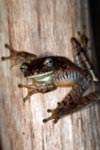
Tree Runner lizard (Plica plica)


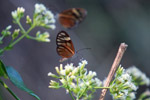
Tiger Longwing Butterfly (Heliconius hecale)


Red rainforest leaves


Common woolly monkey at a rehabiltiation center for animals trafficked for the pet trade


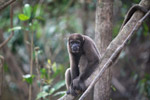
Common woolly monkey (Lagothrix lagotricha)


Storm over the Amazon river


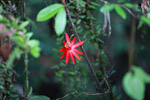
Red passion vine flower


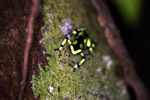
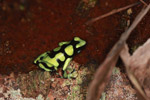
Green and Black Poison Dart Frog (Dendrobates auratus) in the rainforest canopy


Clearwing butterfly


Giant anole


Black and yellow weevil


Amazonian Bird of Paradise


Clown tree frog (Dendropsophus leucophyllatus)


Red passion vine flower in the Amazon rainforest


Green and Black Poison Dart Frog (Dendrobates auratus) in Colombia


Orb spider


Social flycatcher bathing


Fishing spider


Fulgoridae family bug


Pygmy Marmoset (Cebuella pygmaea)


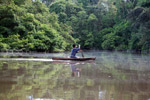
Indigenous Tikuna paddling a dugout canoe on a tributary of the Amazon


Clear-wing butterfly


Common Squirrel Monkey (Saimiri sciureus)


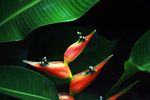
Heliconia


Bird of Paradise in the Amazon


Tree frog


Coconut trees


Heliconia


Common woolly monkey at a rehabiltiation center for animals once trafficked for the pet trade


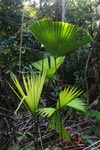
Palm fronds


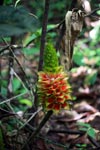
Red ginger flower


Red bird of paradise flower


Orange, black, yellow, and red flag footed bug


Green and Black Poison Dart Frog (Dendrobates auratus) in the rainforest canopy


Juvenile green iguana (Iguana iguana)


Plant


Fallen purple flower in the Choco rainforest


Orange flower


The muddy Amazon


Small scale deforestation in the Colombian Amazon


Rain the Amazon


Rainforest leaves


Festive Amazon Parrot (Amazona festiva)


Orange spider


Canopy platform in Amacayacu National Park


River near Penalosa


Storm clouds over the Amazon


Danilo V (Arhauco)


Gorgeous blue planthopper


Tree frog


Rainforest of the Darien


Rainforest hunter


Coconut trees


Small scale deforestation in the Colombian Amazon


Sunset over the Amazon River


Green leafhopper with orange spots on its head and a black patch on its back


Thunderhead over the Amazon River


Butterfly


Canopy tree-climbing platform in Amacayacu National Park


Cowboys herding cattle across a river


Blue and orange insect


Pygmy Marmoset (Cebuella pygmaea)


Fuschia-colored tree flower in Colombia


Page 2 | 2006-2007 trip highlights

Colombia Rainforest report
Colombia deforestation rates


News on Colombia

Giant prehistoric freshwater turtle discovered

(05/18/2012) Researchers working in Colombia has discovered the fossilized remains of a giant freshwater turtle that lived some 60 million years ago.


Educating the next generation of conservation leaders in Colombia

(05/14/2012) Colombia's northern departments of Cordoba and Bolivar are home to an abundance of coral reefs, estuaries, mangroves forests, and forests. Rich in both marine and terrestrial wildlife, local communities depend on the sea and land for survival, yet these ecosystems are imperiled by booming populations, overexploitation, and unsustainable management. Since 2007, an innovative education program in the region, the Guardians of Nature, has worked to teach local children about the ecology of the region, hoping to instill a conservation ethic that will aid both the present and the future.


Pictures: Jaguar bonanza caught on camera

(05/13/2012) Images of several jaguars, including cubs, have been captured by camera traps on a Colombian ranch that is well known among cat researchers for its diversity of felines.


Photos: Uncontacted Amazon tribes documented for first time in Colombia

(04/19/2012) Aerial surveys of a remote area of rainforest along the Colombia-Brazil border have produced the first photographic evidence of uncontacted tribes, according to a conservation group that works to safeguard indigenous territories and culture. The photos, released by the Amazon Conservation Team (ACT), show five long houses or malokas thought to belong to two indigenous groups, the Yuri or Carabayo and Passé, some of the last isolated tribes in the Colombian Amazon. The images provide confirmation that uncontacted communities still exist within the Rio Puré National Park, which protects a million hectares (2.47 million acres) of mostly pristine rainforest between the Caquetá and Putumayo River basins along the Brazilian border.


World's most toxic frog gets new reserve

(03/05/2012) Touching a wild golden poison frog could kill you within minutes: in fact, a single golden poison frog, whose Latin name Phyllobates terribilis is even more evocative than its common one, is capable of killing 10 humans with its one milligram dose of poison. Yet the deadly nature of this tiny frog has not stopped it from nearing extinction. Now, in a bid to save the species, the World Land Trust (WLT) and Colombian NGO ProAves have teamed up to establish a 50 hectare (124 acres) reserve in the Chocó rainforest.


Cute animal photo of the day: twin cottontop tamarins born in London Zoo

(02/23/2012) Twin cottontop tamarins (Saguinus oedipus) were born in the Zoological Society of London's (ZSL) zoo in London this month. Mother Sabi gave birth to the pair after five months. Currently the twins are only five centimeters tall (two inches) tall. Found only in Colombia, cottontop tamarins are listed as Critically Endangered by the IUCN Red List. Currently it's estimated around 6,000 individuals survive in the wild.


Colombian community leader talks about REDD

(02/21/2012) A pioneering project to reduce deforestation and forest degradation in a former conflict zone in Colombia has won gold certification under the Climate, Community, and Biodiversity (CCB) standard. The accreditation will help local communities access carbon finance in their efforts to safeguard biologically-rich forests. The project is located in Colombia's Darien region, near the border with Panama. The area is part of the Chocó, the rainforest ecosystem that runs along the Pacific coast of Colombia and Ecuador but has been heavily affected in places by deforestation. Everildys Cordoba is the project's coordinator on the community side. Cordoba grew up in Penaloza, a small town not far from the Caribbean coast of Colombia and the country's border with Panama. But in 1998, she was forcibly displaced by armed actors. Today, she has returned to her land to lead the project.


'Gold' standard for REDD forest conservation project in Colombia's Choco

(02/15/2012) A pioneering project to reduce deforestation and forest degradation in a former conflict zone in Colombia has won gold certification under the Climate, Community, and Biodiversity (CCB) standard. The accreditation will help local communities access carbon finance in their efforts to safeguard biologically-rich forests.


Photos of the day: a celebration of wetlands (for World Wetlands Day)

(02/02/2012) Forget the groundhogs, February 2nd is also World Wetland Day, commemorating the historic convention of wetlands in Ramsar, Iran in 1971. The Ramsar Treaty was an international agreement meant to address the loss and degradation of wetlands worldwide.


Photo of the Day: Critically Endangered brown spider monkey discovered in park

(01/26/2012) Researchers with The Wildlife Conservation Society (WCS) and Colombia’s National Parks Unit have located at least two individuals of brown-spider monkey (Ateles hybridus) in Colombia's Selva de Florencia National Park. The discovery is important because its the only known population of this particular subspecies (Ateles hybridus brunneus) in a protected area.


Animal picture of the day: dueling green iguanas

(01/03/2012) Found throughout Central and South America and parts of the Caribbean, the green iguana (Iguana iguana) is a large, mostly herbivorous lizard.


Using palm hearts sustainably in Colombia

(12/12/2011) Long eaten by indigenous populations, palm hearts have also popular abroad, usually in fine dining establishments. However, palm hearts are cut-out of the inner core of various palm tree species, in some cases killing the tree. A new study published in mongabay.com's open access journal Tropical Conservation Society looks at the sustainability of palm heart extraction from the palm species Prestoea acuminata in the Colombian Andes. While harvesting from Prestoea acuminata does not kill the host tree, better management is needed to ensure the practice doesn't become unsustainable.


8 Amazon countries pledge more coordination in rainforest conservation

(11/27/2011) Eight Amazon countries pledged greater cooperation in efforts to protect the world's largest rainforest from deforestation and illegal mining and logging, reports AFP.


Costa Rican fishermen plundering Colombian waters for sharks

(10/14/2011) Costa Rican fishermen have killed some 2,000 sharks in Colombian waters off Malpelo island, a protected area renowned for its marine life, reports Colombia Reports.


Colombian president: no oil drilling in award-winning Seaflower marine reserve

(10/03/2011) Colombian president, Juan Manuel Santos, announced over the weekend that there will be no oil exploration in the award-winning Seaflower Biosphere Reserve and Marine Protected Area (MPA). Spreading over 65,000 square kilometers (6,500,000 hectares), Seaflower MPA is home to over a hundred coral species, over 400 fish, some 150 birds, four marine turtles species, and the magnificent mollusk, the queen conch (Strombus gigas).


Scientists discover giant species of crocodile; luckily it is extinct

(09/15/2011) Researchers excavating a coal mine in Colombia have discovered a previously unknown species of prehistoric crocodile. The beast is described in the September 15 issue of the journal Palaeontology.


Picture of the day: milking a fer-de-lance

(08/24/2011) If you're unfortunate enough to be bit by a venomous snake in South America, its most likely the fer-de-lance (Bothrops atrox).


Picture of the day: horse-and-rider in the Amazon

(08/02/2011) Riding a horse in the world's greatest tropical rainforest may be the definition of what kids today call 'bad-ass'. It certainly makes cowboys in Texas look prosaic.


Animal picture of the day: the world's most blue lizard?

(07/20/2011) The blue anole is one of the world's most spectacular reptiles. Found only on the island of Gorgona, the blue anole is so elusive and rare that scientists have been unable to give an estimate of its population. However it is considered threatened due to its dependence on its small island habitat.


New technology enables scientists to map rainforest biodiversity by airplane

(06/02/2011) A new airplane-based remote-sensing and analysis system will enable scientists to catalog tree species as they create three-dimensional maps of tropical forests. Unveiled today at the Hiller Aviation Museum in San Carlos, California by Greg Asner of the Carnegie Institution's Department of Global Ecology, the newest version of the Carnegie Airborne Observatory (CAO) will offer powerful insights into the composition and biology of tropical forests.


New global carbon map for 2.5 billion ha of forests

(05/31/2011) Tropical forests across Latin America, Africa, and Southeast Asia stored 247 gigatons of carbon — more than 30 years' worth of current emissions from fossil fuels use — in the early 2000s, according to a comprehensive assessment of the world's carbon stocks. The research, published in the journal Proceedings of the National Academy of Sciences by an international team of scientists, used data from 4,079 plot sites around the world and satellite-based measurements to estimate that forests store 193 billion tons of carbon in their vegetation and 54 billion tons in their roots structure. The study has produced a carbon map for 2.5 billion ha (6.2 billion acres) of forests.


Red rodent shows up at Colombian nature lodge after 113 years on the lam

(05/18/2011) The red-crested tree rat (Santamartamys rufodorsalis) had not been recorded since 1898 and was thought possibly extinct—that is until one showed up at 9:30 PM on May 4th at a lodge in El Dorado Nature Reserve in northern Colombia. 'He just shuffled up the handrail near where we were sitting and seemed totally unperturbed by all the excitement he was causing,' said Lizzie Noble, a British volunteer with Fundacion ProAves.


Amazon still neglected by researchers

(03/28/2011) Although the Amazon is the world's largest tropical forest, it is not the most well known. Given the difficulty of access along with the fear of disease, dangerous species, indigenous groups, among other perceived perils, this great treasure chest of biology and ecology was practically ignored by scientists for centuries. Over the past few decades that trend has changed, however even today the Amazon remains lesser known than the much smaller, and more secure, tropical forests of Central America. A new study in mongabay.com's open access journal Tropical Conservation Science, which surveyed two prominent international tropical ecology journals (Biotropica and Journal of Tropical Ecology) between 1995 and 2008, finds that Central America was the subject of twice as many studies as the Amazon. In fact, according to the authors, much of the Amazon remains terra incognito to researchers, even as every year more of the rainforest is lost to human impacts.


Into Colombia's Sierra Nevada

(03/11/2011) The highest coastal mountain on the planet rises 18,942 feet (5,775-meters) above the Caribbean Sea; it’s snow-capped peaks piercing through the clouds some 24 miles from an idyllic tropical beach. But to the casual visitor, the Sierra Nevada of Santa Marta in Colombia does not seem so grandiose. It slopes up and down until it disappears into the clouds, jealously concealing its tropical glacier. Somewhere up there, shrouded in mystery, like an ancient treasure, hides the most impressive summit in the Caribbean. People living along this part of the coastline say the snows of the Sierra are visible from some beaches, but to me they remain elusive even after many trips to the region. To catch a glimpse of the snows from the Caribbean would be a welcoming gift, but I have really come here to experience the Sierra, whatever it would reveal.


Worldwide search for 'lost frogs' ends with 4% success, but some surprises

(02/16/2011) Last August, a group of conservation agencies launched the Search for Lost Frogs, which employed 126 researchers to scour 21 countries for 100 amphibian species, some of which have not been seen for decades. After five months, expeditions found 4 amphibians out of the 100 targets, highlighting the likelihood that most of the remaining species are in fact extinct; however the global expedition also uncovered some happy surprises. Amphibians have been devastated over the last few decades; highly sensitive to environmental impacts, species have been hard hit by deforestation, habitat loss, pollution, agricultural chemicals, overexploitation for food, climate change, and a devastating fungal disease, chytridiomycosis. Researchers say that in the past 30 years, its likely 120 amphibians have been lost forever.


Cocaine production killing Colombia's rainforests

(01/24/2011) Researchers have found that coca cultivation is associated with high rates of forest loss, at least in the southern forests of Colombia. According to a new paper just published in Environmental Science and Technology, areas near new coca plots are significantly more likely to suffer from forest loss. Politicians, environmental groups, and others have long attributed deforestation to coca production. But these researchers are the first to quantity the effect of coca cultivation while controlling for other factors.


Italy and Panama continue illegal fishing, says new report

(01/15/2011) On Wednesday, the National Oceanic and Atmospheric Administration (NOAA) issued its biennial report identifying six countries whose fisheries have been engaged in illegal, unreported, or unregulated (IUU) fishing during the past two years. The report comes at a time when one-fifth of reported fish catches worldwide are caught illegally and commercial fishing has led to a global fish stock overexploitation of an estimated 80 percent.


'Environmental and social aggression': oil exploration threatens award-winning marine protected area

(12/01/2010) The Seaflower Marine Protected Area (MPA), which recently won top honors at the Convention on Biological Diversity (CBD) in Japan, is now under threat by planned oil exploration in the region, according to the Providence Foundation which is devoted to protecting the area. Proposed blocs for exploration by the Colombian government lie in the North Cays adjacent to the park, and perhaps even inside MPA boundaries. Spreading over 65,000 square kilometers (6.5 million hectares), Seaflower MPA lies within the Colombian Caribbean department known as the Archipelago of San Andres, Old Providence and Santa Catalina. This richly diverse Archipelago is home to a known 57 coral species, over 400 fish, and some 150 birds, as well as the ethnic and cultural minority: the Raizal people. The prospect of massive infrastructure or, even worse, oil spills in the area could devastate the park and locals' livelihoods.


Record number of nations hit all time temperature highs

(11/23/2010) To date, nineteen nations have hit or matched record high temperatures this year, according to Jeff Master's Wunder Blog, making 2010 the only year to have so many national records. In contrast, no nation this year has hit a record cold temperature.


Pictures: 'Mr. Burns' frog discovered in Colombia along with 2 other new species

(11/15/2010) Three previously undocumented species of frog have been discovered in Colombia, reports Conservation International.


all pictures | indexes


what's new | rainforests | tropical fish | for kids | search | about | copyright & use | contact

Copyright Rhett Butler 1994-2012

Pictures were taken by Rhett A. Butler, copyright 2008. While these photos are the property of mongabay.com, it may be permissible to use them for non-commercial purposes (like powerpoint presentations and school projects), provided that the images are not altered in any form. Please read this for more details. If you are interested in using an image in a publication please contact me.


Mongabay.com is a free resource.