CHINA: Slideshow | Shanghai | Yunnan | Xinjiang

China pictures

All images are the property of Rhett A. Butler / mongabay.com, copyright 2006. Contact me regarding use and reproduction.

Related articles

Photos from Xinjiang, a Muslim region in western China -- 10/09/2006
Xinjiang, China's largest and western-most province, is one of the planet's most remote and desolate regions. Covering more than one-sixth the country's territory, Xinjiang borders Tibet, Mongolia, Russia, Kazakhstan, Kyrgyzstan, Tajikistan, Afghanistan, and Pakistan, and is dominated by ethnic minorities, notably the Muslim Uyghurs who make up nearly half the 18 million who live in the province. Xinjiang's ethnic mix reflects its historical importance as a central part of the Silk Road, a trading route used since ancient times to transport good between East and West.

Saving China's golden monkey from extinction -- 10/18/2006
High in the cloud-shrouded Yunling mountains of northwestern Yunnan and southeastern Tibet (southwestern China) lives one of the world's most elusive monkeys, the Yunnan golden or snub-nosed monkey (Rhinopithecus bieti). Despite dwelling the most extreme environment of any monkey species -- high-altitude evergreen forests at elevations from 3000 - 4500 m (9800 - 14,800 feet) where temperatures may fall below freezing for several months in a row -- today there are less than 2000 of Yunnan snub-nosed monkeys remaining. Hunting and habitat loss has brought the species, which is limited to a single mountain range and fragmented into 15 small sub-populations at risk to genetic bottlenecks and inbreeding depression, to the brink of extinction.
Many Americans probably think of China as a land of crowded cities (Shanghai) and expansive agricultural areas. In reality much of China, like the United States, is wilderness, with low population density, magnificent landscapes, and cultural diversity. On my recent trip I visited two regions that fit this description: Xinjiang in far western China, near the border of Tajikistan, Pakistan, and Afghanistan; and northwestern Yunnan, historically and culturally the southeastern-most part of Tibet. These are my pictures,


XINJIANG

Xinjiang, an autonomous province dominated by Muslims, lies in the heart of the ancient Silk Road, a trading route used since ancient times to transport good between East and West. Xinjiang is characterized by rough terrain, with dry deserts accented by some of the highest mountains in the world. Xinjiang is the largest political subdivision of China, accounting for more than one sixth of China's total territory.

Main Sections


People


Scenery


Other Sections

Aerial  |   Agriculture  |   Datong  |   Datong Region  |   Infrastructure  |   Karakoram Highway  |   Kashgar  |   Kashgar Bazaar  |   Kusrap  |   Lake Karakul  |   Lakes  |   Livestock  |   Markets  |   Mosques  |   Mountains  |   Rivers  |   Roads  |   Tashkurgan  |   Temples  |   Villages  |   Yarkand  |   Yurts


20+ Photos

Uighur woman in front of her yurt


Traditional animal-skin yurt


Kusrap man


Uygur boy on horseback at Karakul Lake


Group of Tajiks riding a tractor


Peaks above the Karakoram highway


Sand mountains of Xinjiang


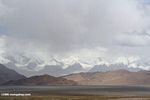
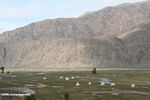
Mountains near a high elevation wetland in Xinjiang


Karakoram highway as it winds through the Pamir mountains


High elevation creek near the Karakoram highway


Turquoise pools along a river in the Kunlun mountains


Peaks surrounding Karakal Lake


Datong village, surrounded by high mountain peaks, partially powered by solar


Village and mountains on road to Datong


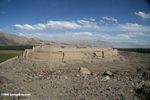
Tashkorgan stone city


Lake in Xinjiang


Snow-capped mountains near Bodge Feng peak in western China


Fisheye view of mountains in Xinjiang near the Karakoram highway


Glaciers near Muztaga peak


Mountains near Muzagata Peak


YUNNAN

Yunnan, the southwestern-most province of China, has the highest biodiversity in the country. Yunnan is drained by six major river systems -- including the Yangtze, Pearl, Mekong, Red (Yuan), Salween, and Irrawaddy -- and ranges in elevation from 76 m (250 feet) to the 6,740-meter (21,905-foot) high Kawagebo Peak. Yunnan is also home to 25 of China's ethnic minorities.

Main Sections


People


Scenery


Other Sections

Aerial  |   Agriculture  |   Buddhism  |   Flora  |   Markets  |   Mekong  |   Mountains  |   Pasture  |   Pingan  |   Rice  |   Ringa Monastery  |   Rivers  |   Shangri-La  |   Sumtsanlang Monastery  |   Temples  |   Villages  |   Yangtze


15 Photos

Tibetan woman with a pink headscarf


Man in a rice field


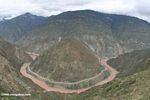
The muddy upper Yangtze in northwestern Yunnan as seen from above


Tibetan woman in the Deqin market


Red grassland


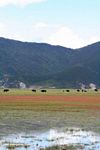
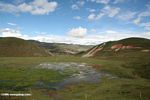
Flooded grassland in Yunnan


Terraced rice fields in NW Yunnan


Deep brick red color of the upper Mekong. This section will be flooded by a dam


Mekong in the mountains of southeastern Tibet / northwestern Yunnan


Rice fields in a valley in Tibetan Yunnan


Giant prayer wheel in Zhongdian


Terraced rice paddies in Yunnan


Tibetan cowboy


Vegetables at the market in Deqin


Tibetan woman leading a cow across a pasture


SHANGHAI

Shanghai is one of the world's largest cities with a population of around 11 million people (the urban area population is closer to 16 million).

Main Sections


Shanghai


Shanghai Aquarium


Recent news on China:


What if companies actually had to compensate society for environmental destruction?

(04/29/2013) The environment is a public good. We all share and depend on clean water, a stable atmosphere, and abundant biodiversity for survival, not to mention health and societal well-being. But under our current global economy, industries can often destroy and pollute the environment—degrading public health and communities—without paying adequate compensation to the public good. Economists call this process "externalizing costs," i.e. the cost of environmental degradation in many cases is borne by society, instead of the companies that cause it. A new report from TEEB (The Economics of Ecosystems and Biodiversity), conducted by Trucost, highlights the scale of the problem: unpriced natural capital (i.e. that which is not taken into account by the global market) was worth $7.3 trillion in 2009, equal to 13 percent of that year's global economic output.


China to phase out super greenhouse gas

(04/24/2013) Some eight billion tonnes of greenhouse gases could be kept out of the atmosphere if China sticks to a deal with the United Nation's Montreal Protocol to eliminate the production of hydro-fluorocarbons (HCFCs). In return for phasing out HCFC production by 2030, the Multilateral Fund of the Montreal Protocol on Substances has promised China of funding up to $385 million.


China 'looting' Africa of its fish

(04/24/2013) Just 9% of the millions of tonnes of fish caught by China's giant fishing fleet in African and other international waters is officially reported to the UN, say researchers using a new way to estimate the size and value of catches. Fisheries experts have long considered that the catches reported by China to the UN's Food and Agriculture Organization (UNFAO) are low but the scale of the possible deception shocked the authors.


The river of plenty: uncovering the secrets of the amazing Mekong

(04/23/2013) Home to giant catfish and stingrays, feeding over 60 million people, and with the largest abundance of freshwater fish in the world, the Mekong River, and its numerous tributaries, brings food, culture, and life to much of Southeast Asia. Despite this, little is known about the biodiversity and ecosystems of the Mekong, which is second only to the Amazon in terms of freshwater biodiversity. Meanwhile, the river is facing an existential crisis in the form of 77 proposed dams, while population growth, pollution, and development further imperil this understudied, but vast, ecosystem.


Rhino horn madness: over two rhinos killed a day in South Africa

(04/22/2013) Rhino poachers have killed 232 rhinos during 2013 so far in South Africa, reports Annamiticus, which averages out to 2.1 a day. The country has become a flashpoint for rhino poaching as it holds more rhinos than any other country on Earth. Rhinos are being slaughter for their horns, which are believed to be a curative in Chinese traditional medicine, although there is no evidence this is so.


'Carbon bubble' could cause next global financial crisis

(04/22/2013) The world could be heading for a major economic crisis as stock markets inflate an investment bubble in fossil fuels to the tune of trillions of dollars, according to leading economists. "The financial crisis has shown what happens when risks accumulate unnoticed," said Lord (Nicholas) Stern, a professor at the London School of Economics. He said the risk was "very big indeed" and that almost all investors and regulators were failing to address it.


Yangtze porpoise down to 1,000 animals as world's most degraded river may soon claim another extinction

(04/16/2013) A survey late last year found that the Yangtze finless porpoise (Neophocaena asiaeorientalis asiaeorientalis) population has been cut in half in just six years. During a 44-day survey, experts estimated 1,000 river porpoises inhabited the river and adjoining lakes, down from around 2,000 in 2006. The ecology of China's Yangtze River has been decimated the Three Gorges Dam, ship traffic, pollution, electrofishing, and overfishing, making it arguably the world's most degraded major river. These environmental tolls have already led to the likely extinction of the Yangtze river dolphin (Lipotes vexillifer), or baiji, and possibly the Chinese paddlefish (Psephurus gladius), which is one of the world's longest freshwater fish.


Double bad: Chinese vessel that collided with protected coral reef holding 22,000 pounds of pangolin meat

(04/15/2013) What do you do when you're smuggling 22,000 pounds of an endangered species on your boat? Answer: crash into a protected coral reef in the Philippines. Last Monday a Chinese vessel slammed into a coral reef in the Tubbataha National Marine Park; on Saturday the Filipino coastguard discovered 400 boxes of pangolin meat while inspecting the ship. Pangolins, which are scaly insect-eating mammals, have been decimated by the illegal wildlife trade as their scales are prized in Chinese Traditional Medicine and their meat is considered a delicacy.


Market figures out that geckos don't cure AIDS, but killing continues

(04/12/2013) Millions of tokay geckos continue to be traded for traditional medicine, despite waning belief that the colorful lizards are a cure for AIDS, reports a new study from TRAFFIC.


Amur leopard population rises to 50 animals, but at risk from tigers, poachers

(04/09/2013) In the remote Russian far east, amid pine forests and long winters, a great cat may be beginning to make a recovery. A new survey estimates that the Amur leopard (Panthera pardus orientalis) population has risen to as many as 50 individuals. While this may not sound like much, it's a far cry from the a population that may have fallen to just 25 animals. Sporting the heaviest coat of any leopard, the Amur leopard largely hunts hoofed animals, such as deer and boar, in a forest still ruled by the Siberian tiger.


Air pollution killed 7 million people in 2010

(04/09/2013) Seven million people died from air pollution in 2010, according to new data from the Global Burden of Disease Study 2010, published in the medical journal Lancet. The research found that indoor air pollution killed 3.5 million people in 2010, outdoor air pollution 3.3 million, and ground level ozone pollution 200,000 people.


30% of Brazil's emissions from deforestation are export-driven

(04/05/2013) 2.7 billion tons of carbon dioxide emissions or 30 percent of the carbon associated with deforestation in the Brazilian Amazon between 2000 and 2010 was effectively exported in the form of beef products and soy, finds a new study published in the journal Environmental Research Letters. The research underscores the rising role that global trade plays in driving tropical deforestation.


Infamous elephant poacher turns cannibal in the Congo

(04/03/2013) Early on a Sunday morning last summer, the villagers of Epulu awoke to the sounds of shots and screaming. In the eastern reaches of the Democratic Republic of the Congo, that can often mean another round of violence and ethnic murder is under way. In this case, however, something even more horrific was afoot.


Poachers enlisting impoverished wildlife rangers as accomplices in elephant, rhino killing

(04/01/2013) Corruption among wildlife rangers is becoming a serious impediment in the fight against poaching, fuelled by soaring levels of cash offered by criminal poacher syndicates, senior conservation chiefs have admitted. Rangers in countries as diverse as Tanzania and Cambodia are being bribed by increasingly organised poaching gangs keen to supply ivory, rhino horn and tiger parts to meet huge consumer demand in Asia.


Progress in incentive-based protection of forests and other watersheds

(03/29/2013) There are two ways to look at Charting New Waters: State of Watershed Payments 2012 - the latest report released by Forest Trends on incentive-based water protection. One is that investments in watershed protection are fast approaching a tipping point - rising 25% from the previous year and with 25% of all recorded investments occurring within last two years. The other is that investments in watershed protection have a long ways to go before they are more than a scant drop in the bucket in terms of world GDP, prevalent outside of China, or independent of government/non-profit aid. The truth lies somewhere in between.


China may push geoengineering as solution to climate change

(03/26/2013) The political dilemma over geoengineering – deliberate, large-scale intervention in the climate system designed to counter global warming or offset some of its effects – will perhaps be most acute in China.


China's 80 billion-a-year chopstick habit impacts forests

(03/17/2013) China's surging demand for disposable chopsticks is taking an increasing toll on the country's forests, reports Chinese state media.


Elephant woes: conservationists mixed on elephant actions at CITES

(03/14/2013) Conservationists couldn't agree if the glass was half-full or half-empty on action to protect elephants at the Convention on International Trade in Endangered Species (CITES) in Bangkok, Thailand. Elephants, especially in Africa, have faced a massive rise in poaching over the last decade with tens-of-thousands shot dead every year. Forests elephants in central Africa have been especially targeted: new research estimates that an astounding 60 percent of the world's forest elephants have been slaughtered for their tusks in the last ten years alone. While conservationists had hopes that CITES would move aggressively against elephant poaching, the results were a decidedly mixed-bag.


Dozens of tropical trees awarded new protections at CITES

(03/12/2013) Numerous species of rosewood and ebony from Madagascar, Latin America, and Southeast Asia were granted protection today at the Convention on International Trade in Endangered Species (CITES) in Bangkok, Thailand. The ruling comes one day after CITES granted the first protections ever to sharks and manta rays.


Sharks and rays win protections at CITES

(03/11/2013) Today, for the first time, sharks and rays have won the vote for better protection under CITES (the Convention on International Trade in Endangered Species), the world's regulating body on trade in threatened species. Five shark species and manta rays, which includes two species, have received enough votes to be listed under Appendix II of CITES, which means tougher regulations, but not an outright ban. However, the votes could still be overturned before the end of the meeting.


China delays carbon tax

(03/07/2013) China will not introduce a carbon tax in 2013, reports Bloomberg.


What happened to the elephants of Bouba Ndjida? [warning: graphic photos]

(03/07/2013) A new report released by the Wildlife Conservation Society says that poachers have killed a staggering 62 percent of Africa's forest elephants in the last decade. The insatiable demand for elephant ivory hails mainly from China and Thailand, which is ironically hosting this year's CITES (CoP16) meeting. The meeting will continue until March 13 2013. The study is based on a survey of five elephant range states including Cameroon. Cameroon is the home of Bouba Ndjida National Park, where the dizzying massacre of 650 elephants occurred last year.


Has shark fin consumption peaked at 100M dead sharks per year?

(03/05/2013) While a new study warns that up to 100M sharks are killed annually, there are signs out of China that demand for shark fin may be on the decline. A study published last week in the journal Marine Policy estimated shark deaths at 100 million in 2000 and 97 million in 2010, suggesting a slight drop in shark killing. Meanwhile reports out of China in recent months suggest an accelerating decline in shark fin consumption. China is the top market for shark fin, which is consumed as a status symbol, typically at wedding ceremonies and business dinners.


New illegal logging ban in EU could sever all ties with companies working in DRC

(03/04/2013) Yesterday, the EU joined the U.S. and Australia in banning all timber that was illegally harvested abroad. The new regulation could have a major impact on where the EU sources its timber, and no where more so than the Democratic Republic of Congo (DRC). According to a new report by Greenpeace, the DRC's current moratorium on industrial logging is being systematically circumvented making all timber from the country suspect.


Thailand's Prime Minister commits to ending ivory trade

(03/04/2013) Yesterday, Thailand's Prime Minister, Yingluck Shinawatra, committed to ending the ivory trade in her country. Her announcement came during the opening of the Convention on the International Trade in Endangered Species of Fauna and Flora (CITES) in Bangkok, which seeks to regulate trade in biodiversity across borders. Wildlife groups say that Thailand's legal trade in domestic ivory—international ivory is illegal of course—has created an easy opening for smugglers from abroad. Currently the ivory trade in Thailand is estimated to be second only to that of China.


Elephant and Rhino issues to be debated at CITES 16th Conference of Parties

(03/04/2013) When the Convention on International Trade in Endangered Species of Wild Fauna and Flora (CITES) meets from March 3-14 in Bangkok for its 16th Conference of Parties (CoP16), elephants and rhinos will be at the top of the agenda. While there are no proposals to open up trade in either elephant ivory or rhino horn, there are several other items on the agenda that will likely generate debate, including proposals for extension of the moratorium on ivory trade, a decision-making mechanism for ivory trade, and suspension of any rhino trophy hunting. Also to be discussed are enforcement mechanisms, including how to prevent illegal ivory from entering existing legal domestic markets.


Chinese government creating secret demand for tiger trade alleges NGO (warning: graphic images)

(02/26/2013) The number of tigers being captive bred in China for consumption exceed those surviving in the wild—across 13 countries—by over a third, according to a new report by the Environmental Investigation Agency (EIA). The report, Hidden in Plain Sight, alleges that while the Chinese government has been taking a tough stance on tiger conservation abroad, at home it has been secretly creating demand for the internationally-banned trade. Few animals in the world have garnered as much conservation attention at the tiger (Panthera tigirs), including an international summit in 2010 that raised hundreds of millions of dollars for the vanishing wild cats.


Nitrogen pollution in China increased 60% annually between 1980 and 2010

(02/25/2013) Nitrogen deposited on land and water in China increased 60 percent annually from the 1980s to the 2000s due to rising use of fertilizer, growth in livestock production, increased coal burning, and a sharp rise in car ownership, reports a study published last week in the journal Nature.


China to tax carbon emissions

(02/20/2013) China will introduce a carbon tax, reports official state media.


Pity the pangolin: little-known mammal most common victim of the wildlife trade

(02/11/2013) Last year tens-of-thousands of elephants and hundreds of rhinos were butchered to feed the growing appetite of the illegal wildlife trade. This black market, largely centered in East Asia, also devoured tigers, sharks, leopards, turtles, snakes, and hundreds of other animals. Estimated at $19 billion annually, the booming trade has periodically captured global media attention, even receiving a high-profile speech by U.S. Secretary of State, Hillary Clinton, last year. But the biggest mammal victim of the wildlife trade is not elephants, rhinos, or tigers, but an animal that receives little notice and even less press: the pangolin. If that name doesn't ring a bell, you're not alone.


SHARE:


PERMISSION & USE
  • You may print this image for personal use.
  • You may share this image via social media.
  • Provided the mongabay.com logo is not removed, you may post this picture on your web site -- please include a link back to this page -- and use it for school projects and powerpoints.
  • If you are interested in using this photograph commercially and/or in a publication, please contact mongabay. Please reference the URL of this photo in your email. High resolution versions may be available and it may be possible to make this image available on a t-shirt or other products.


    SEE - PLACES:
    Alaska
    Angola
    Argentina
    Australia
    Belize
    Benin
    Bhutan
    Botswana
    Brazil
    Burma
    California
    Cambodia
    Cameroon
    China
    Colombia
    Costa Rica
    Croatia
    Ecuador
    Egypt
    Gabon
    Ghana
    Grand Canyon
    Guatemala
    Guyana
    Honduras
    Iceland
    India
    Indonesia
    Italy
    Jordan
    Kauai
    Kenya
    Laos
    Louisiana
    Madagascar
    Malaysia
    Maui
    Mexico
    Namibia
    Panama
    Peru
    Nepal
    New Zealand
    Oahu
    Sao Tome & Principe
    Slovenia
    Suriname
    Tanzania
    Thailand
    Uganda
    United States
    Utah
    Venezuela
    Zimbabwe


    SEE - TOPICS:
    Aerial Photography
    Agriculture
    Animals
    Apes
    Apes
    Arthropods
    Beaches
    Beetles
    Birds
    Borneo
    Camouflage
    Cats
    Chameleons
    Conservation
    Coral Reefs
    Deforestation
    Elephants
    Fish
    Fishing
    Flora
    Flowers
    Frogs And Toads
    Geckos
    Glaciers
    Gorillas
    Herps
    Indigenous People
    Insects
    Lemurs
    Lizards
    Mammals
    Mountains
    Orangutans
    Rainforests
    Reptiles
    Rhinos
    Ruins
    Sea Turtles
    Snakes
    Sunsets
    Trees
    Waterfalls


    LEARN:
    Freshwater Fish Environmental News For Kids Rainforests
    Tropical Conservation Science
    Madagascar


    Search for other pictures


  • what's new | rainforests | tropical fish | for kids | search | about | copyright & use | contact

    Copyright Rhett Butler 1994-2012

    Pictures were taken by Rhett A. Butler, copyright 1996-2009. While these photos are the property of mongabay.com, it may be permissible to use them for non-commercial purposes (like powerpoint presentations and school projects), provided that the images are not altered in any form. Please read this for more details. If you are interested in using an image in a publication please contact me.


    Mongabay.com is a free resource.