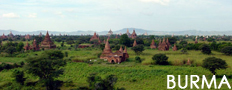
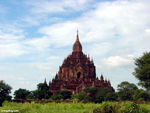
Below you will find photo collections of places from around the world. All images are the property of Rhenda Glasco. Contact me with questions regarding use, reproduction, or purchase of any of the pictures.
The Union of Myanmar, formerly the Union of Burma, is the largest country in Southeast Asia. It is bordered by the People's Republic of China on the north, Laos on the east, Thailand on the south east, Bangladesh on the west, and India on the north west, with the Andaman Sea to the south, and the Bay of Bengal to the south west (for a total of over 2,000 kilometers of coast line).
In 1989, the country officially changed the English version of its name from Burma to Myanmar (along with changes in the English versions of many place names in the country, such as its capital city, from Rangoon to Yangôn). However, the official name of the country in the Burmese language, Myanma ( ), did not change. The English renaming proved to be politically controversial, seen by some as being less inclusive of minorities and unscholarly.
The country has been ruled by a military junta led by General Ne Win from 1962 to 1988, and its political system today remains under the tight control of the military.
Politics
Myanmar has been under military rule since 1962. The current head of state is General Than Shwe who holds the title of "Chairman of the State Peace and Development Council." His appointed prime minister was Khin Nyunt until 19 October 2004, when he was replaced by Lt.-Gen. Soe Win. Almost all cabinet offices are held by military officers. US sanctions against the military government have been largely ineffective, due to loopholes in the sanctions and the willingness of mainly Asian business to continue investing in Myanmar and to initiate new investments, particularly in natural resource extraction. For example, the French petroleum company Total is able to buy Myanmar's oil despite the country being under sanctions, although Total (formerly TotalFinaElf) is the subject of a lawsuit in French and Belgian courts for alleged connections to human rights abuses along the gas pipeline jointly owned by Total, the American company Unocal, and the Myanmarian military.1 The United States clothing and shoe industry could also be affected if all the sanctions loopholes were to be closed, although they were already subject to boycotts prior to US sanctions imposed in June of 2002.2
The regime is accused of having a poor human rights record, and the human rights situation in the country is a subject of concern for a wide number of international organizations. There is no independent judiciary in Myanmar and political opposition to the military government is not tolerated.
Aung San Suu Kyi, whose party won 83% of parliamentary seats in a 1990 national election, but who was prevented from becoming prime minister by the military, has earned international praise as an activist for the return of democratic rule to Myanmar. She won the Nobel Peace Prize in 1991. She has been repeatedly placed under house arrest, although in recent years the regime has been willing to enter into negotiations with her and her party, the National League for Democracy. She was most recently placed under house arrest on May 31, 2003, following an attack on her convoy in northern Myanmar. She remains under house arrest
Human rights in Myanmar
Human rights in Myanmar are a long-standing concern for the international community and human rights organizations. There is general agreement that the military regime in Myanmar (Burma) is one of the world's most repressive regimes.
The Freedom in the World 2004 report by Freedom House notes that "The junta rules by decree, controls the judiciary, suppresses nearly all basic rights, and commits human rights abuses with impunity. Military officers hold most cabinet positions, and active or retired officers hold most top posts in all ministries. Official corruption is reportedly rampant both at the higher and local levels." [1]
Brad Adams, director of Human Rights Watch's Asia division, in a 2004 address described the human rights situation in the country as appalling: "Burma is the textbook example of a police state. Government informants and spies are omnipresent. Average Burmese people are afraid to speak to foreigners except in most superficial of manners for fear of being hauled in later for questioning or worse. There is no freedom of speech, assembly or association."
Forced labour
According to the International Confederation of Free Trade Unions several hundred thousand men, women, children and elderly people are forced to work against their will by the administration. Individuals refusing to work may be victims of torture, rape or death.
The International Labour Organization has continuously called on Myanmar to end the practice of forced labour since the 1960s. In June 2000, the ILO Conference adopted a resolution calling on governments to cease any relations with the country that might aid the junta to continue the use of forced labour. [3]
Freedom of speech and Political freedom
A 2004 Amnesty International report names more than 200 individuals imprisoned between 1989 and 2004, who are among more than 1,300 political prisoners who, according to the organization, have been imprisoned after unfair trials. The prisoners, including National League for Democracy (NLD) leaders Aung San Suu Kyi and U Tin Oo, have "been wrongfully denied their liberty for peaceful acts that would not be considered crimes under international law", Amnesty International claims. [4].
The Freedom House report notes that the authorities arbitrarily search citizens' homes, intercept mail, and monitor telephone conversations, and that the possession and use of telephones, fax machines, computers, modems, and software are criminalized.
Children's rights
According to Human Rights Watch, recruiting and kidnapping of children to the military is commonplace. An estimated 70,000 of the country’s 350,000-400,000 soldiers are children. There are also multiple reports of widespread child labour.
(05/18/2012)
A new species of arowana, a highly valued aquarium fish, has been described from southern Myanmar (Burma). The description is published in last month's issue of the journal Aqua.
(05/16/2012)
Scientists in China have located a second population of the Myanmar snub-nosed monkey (Rhinopithecus strykeri), a primate that was only first discovered two years ago in Myanmar, also known as Burma. Long Yongcheng, scientist with the Nature Conservancy in China, told the China Daily that his team have discovered 50-100 Myanmar snub-nosed monkeys in the Gaoligong Mountain Natural Reserve near the border with Myanmar in Yunnan Province.
(04/26/2012)
Following historic elections, many foreign powers have relaxed or lifted sanctions against Myanmar, also known as Burma. But the Environmental Investigation Agency (EIA) warns that the end of sanctions presents Myanmar and the world with a choice: further plundering of the country's forests for outside markets or large-scale forestry reform.
(04/17/2012)
The Wildlife Conservation Society (WCS) has pledged to work with all of its institutions to save at least half of the world's most 25 endangered turtles as listed in a report by WCS and the Turtle Conservation Coalition last year. The program will include both conservation work in the field as well as participation from WCS's zoological institutions for captive breeding and future reintroductions. Even with WCS's ambitious program, however, it is likely this century will see a number of turtle extinctions.
(03/28/2012)
Wild teak forests continue to decline, threatening genetic diversity, while commercial planted teak forests are on the rise, according to a new assessment by the Food and Agriculture Organization (FAO). Overall, teak forests have declined by 1.3 percent, or 385,000 hectares, worldwide from 1992 to 2010. Teak (Tectona grandis) is used for a variety of commercial purposes, including outdoor furniture and flooring.
(01/31/2012)
The word "cattle," for most of us, is the antithesis of exotic; it's familiar like a family member one's happy enough to ignore, but doesn't really mind having around. Think for a moment of the names: cattle, cow, bovine...likely they make many of us think more of the animals' byproducts than the creatures themselves—i.e. milk, butter, ice cream or steak—as if they were an automated food factory and not living beings. But if we expand our minds a bit further, "cattle" may bring up thoughts of cowboys, Texas, herds pounding the dust, or merely grazing dully in the pasture. But none of these titles, no matter how far we pursue them, conjure up images of steamy tropical rainforest or gravely imperiled species. A cow may be beautiful in its own domesticated sort-of-way, but there is nothing wild in it, nothing enchanting. However like most generalizations, this idea of cattle falls to pieces when one encounters, whether in literature or life, the banteng.
(01/10/2012)
In 2010 researchers described a new species of primate that reportedly sneezes when it rains. Unfortunately, the new species was only known from a carcass killed by a local hunter. Now, however, remote camera traps have taken the first ever photo of the elusive, and likely very rare, Myanmar snub-nosed monkey (Rhinopithecus strykeri), known to locals as mey nwoah, or 'monkey with an upturned face'. Locals say the monkeys are easy to locate when it rains, because the rain catches on their upturned noses causing them to sneeze.
(12/22/2011)
Many of 2011's most dramatic stories on environmental issues came from people taking to the streets. With governments and corporations slow to tackle massive environmental problems, people have begun to assert themselves. Victories were seen on four continents: in Bolivia a draconian response to protestors embarrassed the government, causing them to drop plans to build a road through Tipnis, an indigenous Amazonian reserve; in Myanmar, a nation not known for bowing to public demands, large protests pushed the government to cancel a massive Chinese hydroelectric project; in Borneo a three-year struggle to stop the construction of a coal plant on the coast of the Coral Triangle ended in victory for activists; in Britain plans to privatize forests created such a public outcry that the government not only pulled back but also apologized; and in the U.S. civil disobedience and massive marches pressured the Obama Administration to delay a decision on the controversial Keystone XL pipeline, which would bring tar sands from Canada to a global market.
(12/14/2011)
Last year researchers scoured forests, rivers, wetlands, and islands in the vanishing ecosystems of the Mekong Delta to uncover an astounding 208 new species over a twelve month period. A new report by the World Wide Fund for Nature (WWF) highlights a number of the new species—from a new snub-nosed monkey to five new meat-eating pitcher plants to a an all-female, cloning lizard—while warning that many of them may soon be gone as the Mekong Delta suffers widespread deforestation, over-hunting and poaching, massive development projects, the destruction of mangroves, pollution, climate change, and a growing population.
(11/06/2011)
China is currently involved in 289 hydroelectric projects worldwide, as reported by International Rivers. Most of the dams are built for hydropower, and over half are considered 'large' projects. The list includes completed dams, one currently under construction, and ones in initial planning stages.
(10/04/2011)
Large-scale opposition has pushed the Myanmar government to suspend construction of a massive Chinese dam. Being built on the confluence of the Mayhka amd Malihka rivers at the head of Irrawaddy River, the Myitsone Dam would have created a reservoir the size of Singapore and has already pushed 12,000 people off their land. China Power Investment Corporation, which is building the dam, has fired back at the Myanmar government saying their decision will lead to 'a series of legal issue'.
(05/16/2011)
Surveying 13 nations and territories in Asia, the wildlife trade organization TRAFFIC found that the bear bile trade remains practically ubiquitous in the region. In many cases the trade, which extracts bile from captive bears' gall bladders for sale as a pharmaceutical, flouts both local and international law, including Appendix I of Convention on International Trade in Endangered Species of Wild Fauna and Flora (CITES ).
(02/02/2011)
Growing populations, expanding agriculture, commodities such as palm oil and paper, logging, urban sprawl, mining, and other human impacts have pushed many of the world's great forests to the brink. Yet scientists, environmentalists, and even some policymakers increasingly warn that forests are worth more standing than felled. They argue that by safeguarding vulnerable biodiversity, sequestering carbon, controlling erosion, and providing fresh water, forests provide services to humanity, not to mention the unquantifiable importance of having wild places in an increasingly human-modified world. Still, the decline of the world's forests continues: the FAO estimating that around 10 million hectares of tropical forest are lost every year. Of course, some of these forests are more imperiled than others, and a new analysis by Conservation International (CI) has catalogued the world's 10 most threatened forests.
(11/23/2010)
To date, nineteen nations have hit or matched record high temperatures this year, according to Jeff Master's Wunder Blog, making 2010 the only year to have so many national records. In contrast, no nation this year has hit a record cold temperature.
(10/26/2010)
Hunters' reports have led scientists to discover a new species of monkey in the northern forests of Myanmar. Discovered by biologists from the Myanmar Biodiversity and Nature Conservation Association with support from primatologists with Fauna & Flora International (FFI) and the People Resources and Biodiversity Foundation, the strange looking primate is a member of the snub-nosed monkey family, adding a fifth member to this unmistakably odd-looking group of Asian primates. However, the species survives in only a small single population, threatened by Chinese logging and hunting.
(08/11/2010)
Developing countries are not the only ones that could benefit from a little environmental support. Wealthier countries may need to 'know themselves' and address these issues at home too. According to a recent study in the open access journal PLoS ONE, wealth may be the most important factor determining a country’s environmental impact. The team had originally planned to study "country-level environmental performance and human health issues," lead author Corey Bradshaw, Director of Ecological Modeling and professor at the University of Adelaide, told mongabay.com. Once they began looking at the available indexes, however, they saw the need for a purely environmental analysis.
(08/09/2010)
The summer isn't over yet, but already seventeen nations have matched or beaten their all-time heat records. According to Jeff Masters' WunderBlog, Belarus, the Ukraine, Cyprus, Russia, Finland, Qatar, the Sudan, Saudi Arabia, Niger, Chad, Kuwait, Iraq, Pakistan, Colombia, Myanmar, Ascension Island, and the Solomon Islands have all equaled or broken their top temperature records this year. In addition, the hottest temperature ever recorded in Asia was taken in Pakistan at 128 degrees Fahrenheit (53 degrees Celsius); this incredible temperature still has to be reviewed by the World Meteorological Organization (WMO).
(08/04/2010)
Myanmar has announced that Hukaung Valley Tiger Reserve will be nearly tripled in size, making the protected area the largest tiger reserve in the world. Spanning 17,477 square kilometers (6,748 square miles), the newly expanded park is approximately the size of Kuwait and larger than the US state of Connecticut.
(10/28/2009)
The illegal wood trade from Myanmar to China has slowed, but it still threatens Myanmar's tropical forests and species, according to a new report by Global Witness. From 2005 and 2008 improved border controls into China led to a drop in imports of logs and sawn wood by 70 percent.
(09/03/2009)
Scientists have stumbled on the Arakan forest turtle for the first time in the wild, according to a report by the Wildlife Conservation Society (WCS). One of the world's rarest turtles, the Arakan forest turtle was thought to be extinct for 86 years, before being discovered in an Asian food market in 1994. It has never before been observed in the wild by scientists. A team with WCS found five of the Critically Endangered turtles in a wildlife sanctuary in Myanmar (also known as Burma). The rarely-visited sanctuary was originally created to protect Asian elephants.
(05/21/2009)
Policies promoting industrial rubber plantations over traditional swidden, or slash-and-burn, agriculture across Southeast Asia may carry significant environmental consequences, including loss of biodiversity, reduction of carbon stocks, pollution and degradation of local water supplies, report researchers writing in Science. Conducting field work in the Xishuangbanna prefecture of China's Yunnan province and assessing broader regional trends, Alan Ziegler of the National University of Singapore and colleagues argue that policies favoring agricultural intensification over small-scale slash-and-burn have encouraged the rapid expansion of rubber plantations across more than 500,000 hectares (1,930 square miles) of montane forest in China, Laos, Thailand, Vietnam, Cambodia, and Myanmar. Despite widespread perception among authorities that "swidden cultivation is a destructive system that leads only to forest loss and degradation", the researchers found that the transition to industrial plantations has not necessarily been a boon to the environment.
(02/19/2009)
Indochina's remaining elephants are at risk from surging ivory prices in Vietnam, according to a new report from the wildlife trade monitoring network TRAFFIC.
(12/15/2008)
More than 1,000 previously unknown species have been discovered in the Greater Mekong, a region comprising Cambodia, Laos, Myanmar (Burma), Thailand, Vietnam and the Yunnan Province of China, in the past decade, according to a new report from WWF.
(12/11/2008)
A new study from Science provides disturbing evidence that one of the zoos’ most popular animals, the elephant, faces a far shorter lifespan in captivity than in the wild. The findings raise new ethical and scientific questions regarding the rightness of keeping elephants in captivity and the causes of their shorter life-spans.
(10/28/2008)
The snow leopard (Panthera uncia) is one of the rarest and most elusive big cat species with a population of 4,500 to 7,500 spread across a range of 1.2 to 1.6 million kilometers in some of the world's harshest and most desolate landscapes. Found in arid environments and at elevations sometimes reaching 18,000 feet (5,500 meters), the species faces great threats despite its extreme habitat. These threats vary across its range, but in all countries where it is found — Afghanistan, Bhutan, China, India, Kyrgyzstan, Kazakhstan, Nepal, Mongolia, Pakistan, Russia, Tajikistan, Uzbekistan and possibly Myanmar — the species is at risk. In some countries snow leopard are directly hunted for their pelt, in others they are imperiled by depletion of prey, loss of habitat, and killing as a predator of livestock. These threats, combined with the cat's large habitat requirements, means conservation through the establishment of protected areas alone may not be enough save it from extinction in the wild in many of the countries in which it lives. Working to stave off this fate in half a dozen of its range countries is the Snow Leopard Conservancy. Founded by Dr. Rodney Jackson, a biologist who has been studying snow leopard in the wild for 30 years, the Conservancy seeks to conserve the species by "promoting innovative grassroots measures that lead local people to become better stewards of endangered snow leopards, their prey, and habitat."
(10/15/2008)
Trafficking of parts from endangered wild cats is rife in Myanmar (Burma) according to a new report from TRAFFIC, the wildlife trade monitoring network. Surveys conducted by TRAFFIC over the past 15 years have turned up 1,320 wild cat parts from at least 1,158 individual animals, including 107 tigers. The group says the toll in the country is far higher.
(09/04/2008)
Myanmar's dense northern wild lands, researchers from the Wildlife Conservation Society have painstakingly gathered a bank of valuable data on the country's populations of tigers and other smaller, lesser known carnivores (see photo attachments). These findings will help in the formulation of conservation strategies for the country's wildlife.
(08/27/2008)
China's imports of raw logs plunged 18.7 percent by volume for the first half of 2008 due to rising prices and a cooling Chinese economy, reports the International Tropical Timber Organization.
Pictures were taken by Rhett A. Butler, copyright 2008. While these photos are the property of mongabay.com, it may be permissible to use them for non-commercial purposes (like powerpoint presentations and school projects), provided that the images are not altered in any form. Please read this for more details. If you are interested in using an image in a publication please contact me.