

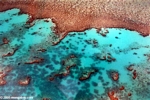
Pictures of aerial photography
[last update ]
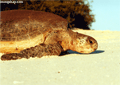
Below you will find a collection of Pictures of Australia. Except where noted, pictures were taken by Rhett A. Butler
 , copyright Mongabay.com 1999-2014. While these images are the property of mongabay.com, it may be permissible to use them for non-commercial purposes (like powerpoint presentations and school projects), provided that the images are not altered in any form. Please read this for more details.
|
|








Date published: 014-Sep-7 | Last updated: 2014-Sep-7
Background on Australia from Wikipedia
The Commonwealth of Australia is a country in the Southern Hemisphere comprising the major land area of Australasia. It includes the entire continent of Australia and a number of islands, the largest of which is Tasmania. Australia has been inhabited for about 50,000 years, originally by Aboriginal and Torres Strait Islander peoples. Eastern Australia was claimed by the British in 1770, and officially settled as a British colony on 26 January 1788. As the population grew and new areas were explored, six largely self-governing Crown Colonies were established within Australia. On 1 January 1901 the six colonies federated and the Commonwealth of Australia was formed. Since federation, Australia has had a stable democratic political system and remains a Commonwealth Realm.
Australia's neighbouring countries include Indonesia, East Timor, and Papua New Guinea to the north, Solomon Islands and Vanuatu to the north-east, and New Zealand to the south-east. The shortest border distance is between the mainlands of Papua New Guinea and Australia at about 150 kilometers; however, the northernmost inhabited island, Boigu Island, is about five kilometers from Papua New Guinea. This has led to a complicated border arrangement allowing access for traditional uses of the waterway across the border by Papua New Guinean people and Torres Strait Islanders.
Origin and history of the name
The name Australia is derived from the Latin australis, meaning southern. Legends of an "unknown southern land" (terra australis incognita) date back to the Roman times, and were commonplace in medieval geography, but were not based on any actual knowledge of Australia. The Dutch adjectival form Australische ("Australian," in the sense of "southern") was used by Dutch officials in Batavia to refer to the newly discovered land to the south as early as 1638. The first writer in English to use the word "Australia" was Alexander Dalrymple in his An Historical Collection of Voyages and Discoveries in the South Pacific Ocean, published in 1771. He used the term to refer to the whole South Pacific region, not specifically to the Australian continent. In 1793, George Shaw and Sir James Smith published Zoology and Botany of New Holland, in which they wrote of "the vast island, or rather continent, of Australia, Australasia or New Holland."
The name "Australia" was popularized by the 1814 work A Voyage to Terra Australis by the navigator Matthew Flinders. Despite its title (which reflected the view of the Admiralty), he used the word "Australia" in the book, which was widely read and gave the term general currency. Governor Lachlan Macquarie of New South Wales subsequently used the word in his dispatches to England. In 1817 he recommended that it be officially adopted. In 1824, the British Admiralty finally accepted that the continent should be known officially as Australia.
History
The date of the first human habitation of Australia is estimated to be between 42,000 and 48,000 years ago[1]. The first Australians were the ancestors of the current Australian Aborigines, and arrived via land bridges and short sea-crossings from present-day south-east Asia. Most of these people were hunter-gatherers, with a complex oral culture and spiritual values based on reverence for the land and a belief in the Dreamtime. The Torres Strait Islanders, ethnically Melanesian, inhabited the Torres Strait Islands and parts of far-north Queensland; they had distinct cultural practices and practiced subsistence agriculture.
The first undisputed recorded European sighting of the Australian continent was made by the Dutch navigator Willem Jansz, who sighted the coast of Cape York in 1606. During the 17th century, the Dutch charted the whole of the western and northern coastlines of what they called New Holland, but made no attempt at settlement. In 1770, James Cook sailed along the east coast of Australia, which he named New South Wales and claimed for Britain. His discoveries provided impetus for the establishment of a penal colony there following the loss of the American colonies.
The British Crown Colony of New South Wales started with the establishment of a settlement (later to become Sydney) at Port Jackson by Captain Arthur Phillip on 26 January 1788. This date was later to become Australia's national day, Australia Day. Van Diemen's Land (the present day Tasmania) was settled in 1803 and became a separate colony in 1825. Britain formally claimed the rest of the continent (present-day Western Australia) in 1829.
Background on Australia from Wikipedia
The Commonwealth of Australia is a country in the Southern Hemisphere comprising the major land area of Australasia. It includes the entire continent of Australia and a number of islands, the largest of which is Tasmania. Australia has been inhabited for about 50,000 years, originally by Aboriginal and Torres Strait Islander peoples. Eastern Australia was claimed by the British in 1770, and officially settled as a British colony on 26 January 1788. As the population grew and new areas were explored, six largely self-governing Crown Colonies were established within Australia. On 1 January 1901 the six colonies federated and the Commonwealth of Australia was formed. Since federation, Australia has had a stable democratic political system and remains a Commonwealth Realm.
Australia's neighbouring countries include Indonesia, East Timor, and Papua New Guinea to the north, Solomon Islands and Vanuatu to the north-east, and New Zealand to the south-east. The shortest border distance is between the mainlands of Papua New Guinea and Australia at about 150 kilometers; however, the northernmost inhabited island, Boigu Island, is about five kilometers from Papua New Guinea. This has led to a complicated border arrangement allowing access for traditional uses of the waterway across the border by Papua New Guinean people and Torres Strait Islanders.
Origin and history of the name
The name Australia is derived from the Latin australis, meaning southern. Legends of an "unknown southern land" (terra australis incognita) date back to the Roman times, and were commonplace in medieval geography, but were not based on any actual knowledge of Australia. The Dutch adjectival form Australische ("Australian," in the sense of "southern") was used by Dutch officials in Batavia to refer to the newly discovered land to the south as early as 1638. The first writer in English to use the word "Australia" was Alexander Dalrymple in his An Historical Collection of Voyages and Discoveries in the South Pacific Ocean, published in 1771. He used the term to refer to the whole South Pacific region, not specifically to the Australian continent. In 1793, George Shaw and Sir James Smith published Zoology and Botany of New Holland, in which they wrote of "the vast island, or rather continent, of Australia, Australasia or New Holland."
The name "Australia" was popularized by the 1814 work A Voyage to Terra Australis by the navigator Matthew Flinders. Despite its title (which reflected the view of the Admiralty), he used the word "Australia" in the book, which was widely read and gave the term general currency. Governor Lachlan Macquarie of New South Wales subsequently used the word in his dispatches to England. In 1817 he recommended that it be officially adopted. In 1824, the British Admiralty finally accepted that the continent should be known officially as Australia.
History
The date of the first human habitation of Australia is estimated to be between 42,000 and 48,000 years ago[1]. The first Australians were the ancestors of the current Australian Aborigines, and arrived via land bridges and short sea-crossings from present-day south-east Asia. Most of these people were hunter-gatherers, with a complex oral culture and spiritual values based on reverence for the land and a belief in the Dreamtime. The Torres Strait Islanders, ethnically Melanesian, inhabited the Torres Strait Islands and parts of far-north Queensland; they had distinct cultural practices and practiced subsistence agriculture.
The first undisputed recorded European sighting of the Australian continent was made by the Dutch navigator Willem Jansz, who sighted the coast of Cape York in 1606. During the 17th century, the Dutch charted the whole of the western and northern coastlines of what they called New Holland, but made no attempt at settlement. In 1770, James Cook sailed along the east coast of Australia, which he named New South Wales and claimed for Britain. His discoveries provided impetus for the establishment of a penal colony there following the loss of the American colonies.
The British Crown Colony of New South Wales started with the establishment of a settlement (later to become Sydney) at Port Jackson by Captain Arthur Phillip on 26 January 1788. This date was later to become Australia's national day, Australia Day. Van Diemen's Land (the present day Tasmania) was settled in 1803 and became a separate colony in 1825. Britain formally claimed the rest of the continent (present-day Western Australia) in 1829.

